
Learning, Adapting, and Leading in Crisis: Reflections from the MENA Education in Emergencies Workshop
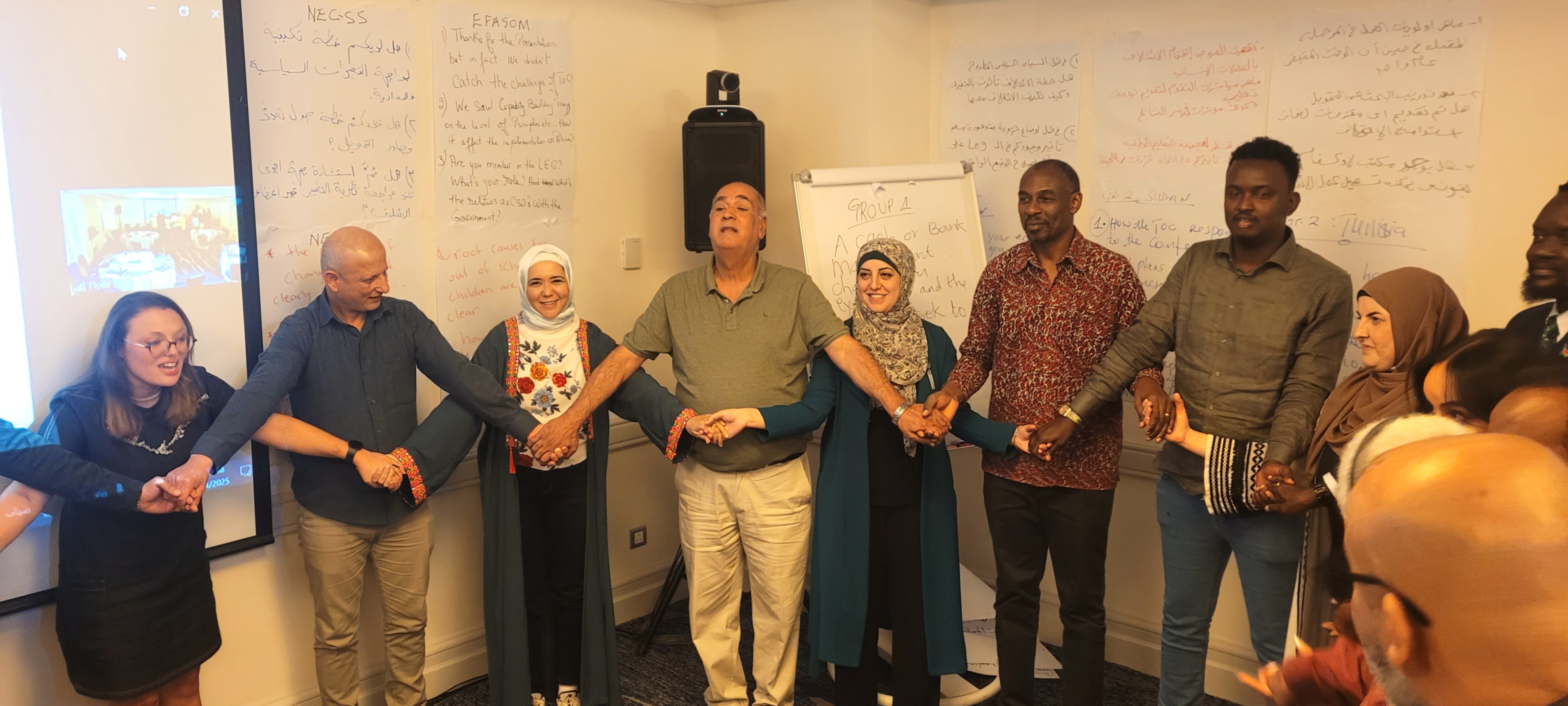
In September, education advocates across the Middle East and North Africa (MENA) sub-region of the Education Out Loud Programme gathered in Amman, Jordan, to reflect on how education access and enjoyment for all children in the MENA region can remain effective through education advocacy in times of crisis.
From this workshop, the coalitions reviewed and adjusted their project strategies and advocacy initiatives to align with their current contexts and assessed the adoption and application of the INEE (International Network of Education in Emergencies) Education in Emergencies standards in their work.
Shifting political and security conditions have forced national and regional education coalitions in the Middle East and North Africa sub-region of the Education Out Loud Programme to rethink strategies while staying grounded in community realities. Ten Education Coalitions were represented including the Arab Campaign for Education for All (ACEA), the MENA Regional Coalition and National Education Coalitions from Egypt, Jordan, Lebanon, Somalia, South Sudan, Sudan, Tunisia, West Bank & Gaza and Yemen all gathered to share learning, and rethink approaches shaped by conflict, political instability, climate induced hazards and economic pressures. Although South Sudan falls under the Horn region, it was included with the MENA coalitions due to the country’s education-in-emergencies context, which aligns with the workshop’s focus.
My key takeaway from the workshop is to adapt whenever there is a need, because we live in a region with emerging crises and we need to analyse our contexts frequently so that we are able to respond well to crises.
Abeer TamimProgramme coordinator, Jordanian coalition for Education
From this workshop, we are going to apply adaptive management and make our Theory of Change a dynamic process so that it is based on our context and the experience of National Education Coalitions and not a fixed element as written in the proposal.
Tasneem Alhmooze Capacity-building and Learning coordinator, ACEA
Even though Tunisia is not currently experiencing a crisis, I have learned that as a CSO it is our responsibility to plan accordingly and anticipate emergencies that may affect education. We must be prepared for situations where learning is disrupted and ensure that the INEE standards are adopted and applied.
Sonia AttiaProgramme coordinator, La Coalition Éducative Tunisienne (CET).
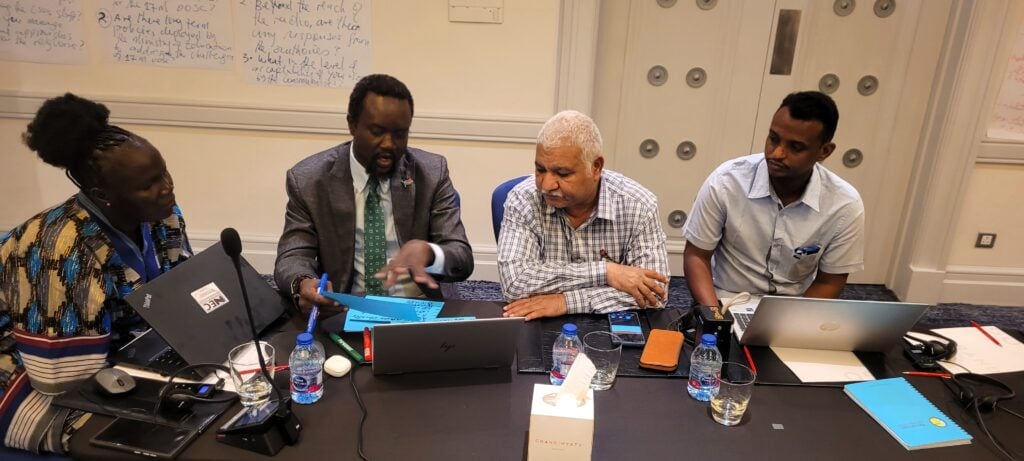
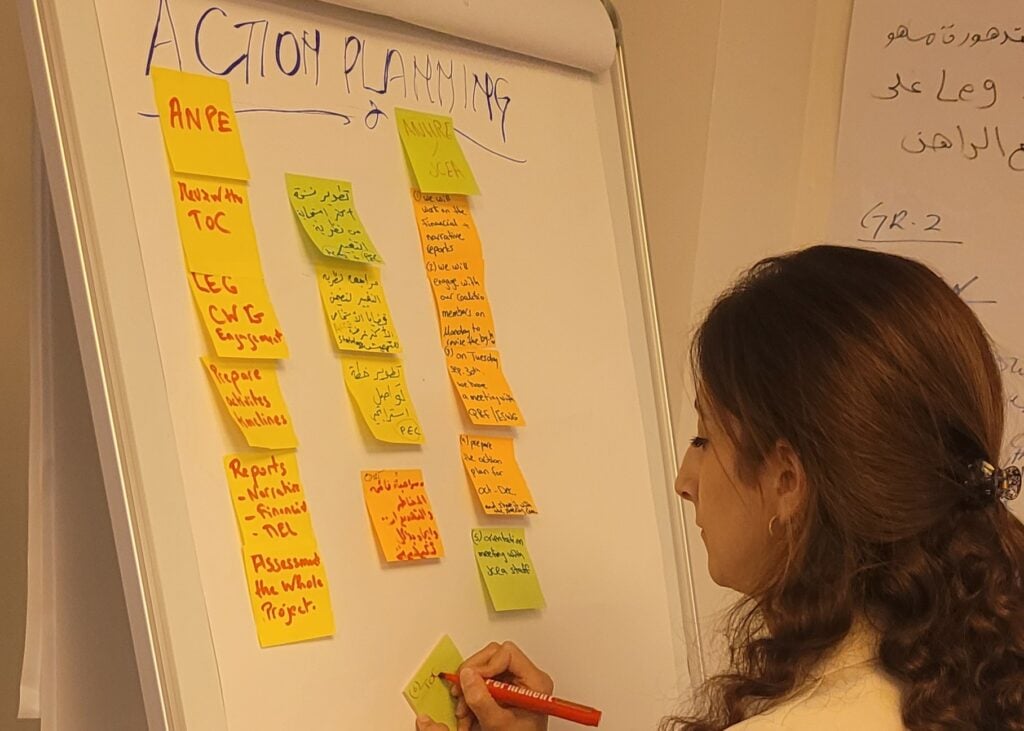
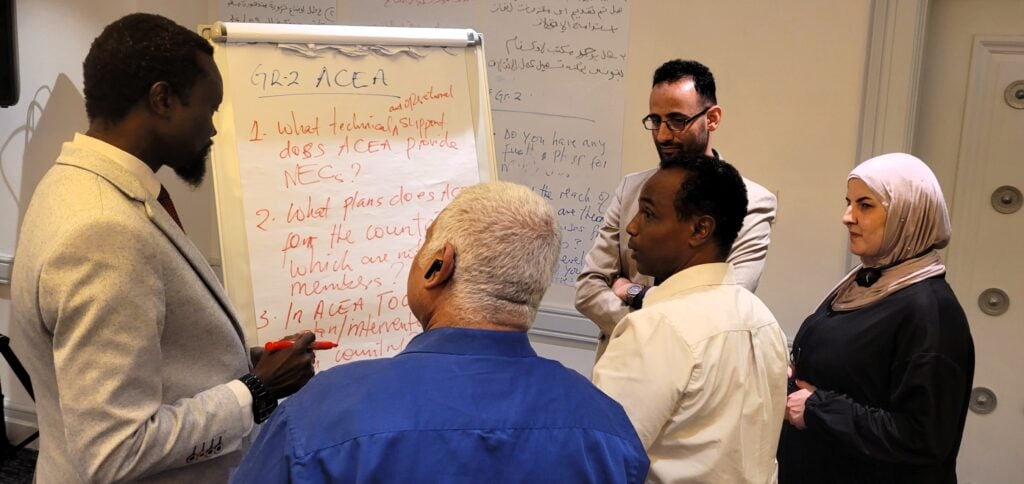
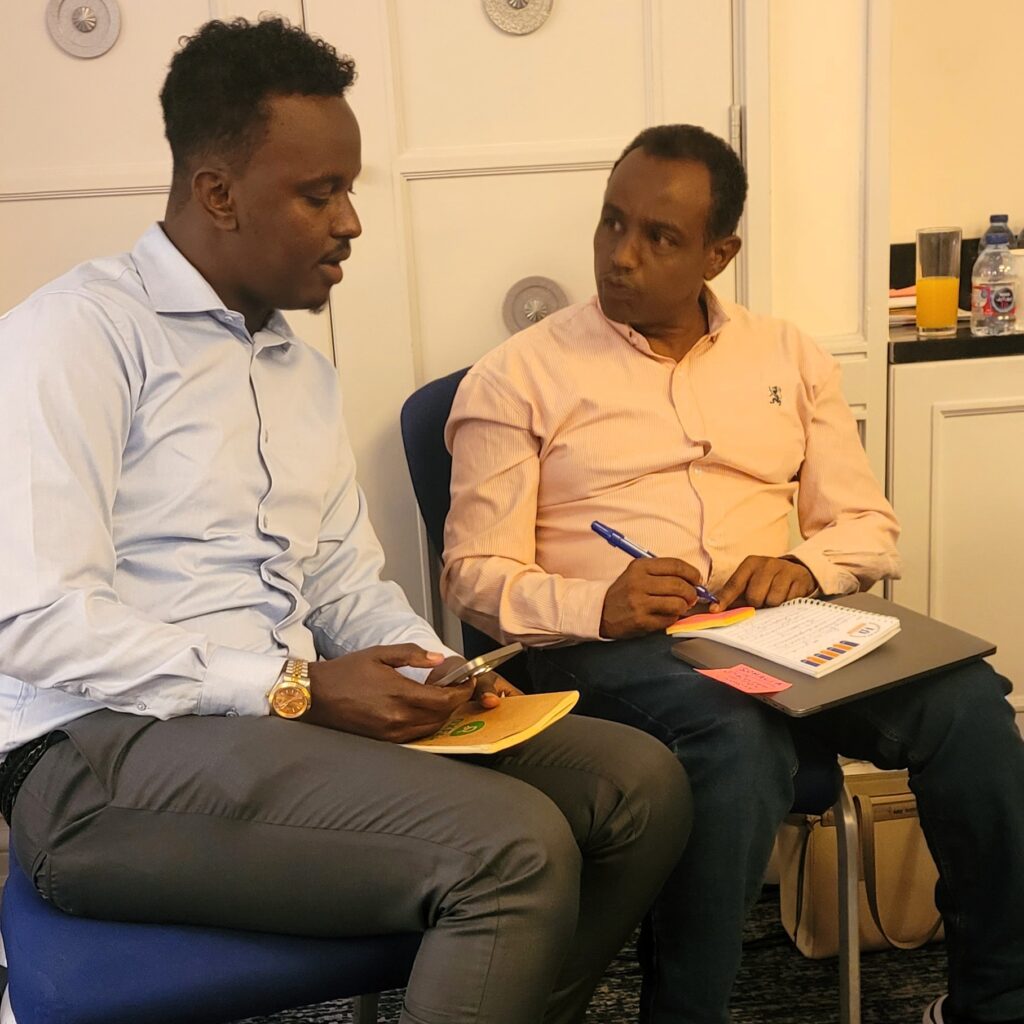
Throughout the workshop, the participants were given an opportunity to review their Theories of Change, project strategies and outcomes and adapt them to their current situation. Country and project operational context analysis underpinned the review and update processes, with opportunity for discussion, input and feedback in groups and plenary.
Participants also reflected on the INEE Minimum Standards for Education in Emergencies, recognising their importance and stressing the need for flexible, community-led approaches that uphold dignity, safety, and continuity of learning, even as crises unfold. It emerged that teacher focus and learner support were critical during times of crisis.
Looking Ahead
Despite the crises that define much of the region, the workshop closed on a note of hope. Each coalition was left with renewed energy to continue advocating for education as a right, adapting their strategies to ensure that learning does not stop, even in the most difficult times. Education Out Loud continues to support coalitions in advancing civil society engagement, shared accountability, and citizen-led action toward inclusive education systems.


The INEE Minimum Standards for Education in Emergencies can be found here.