
How community action helped bring children back to school in Uganda
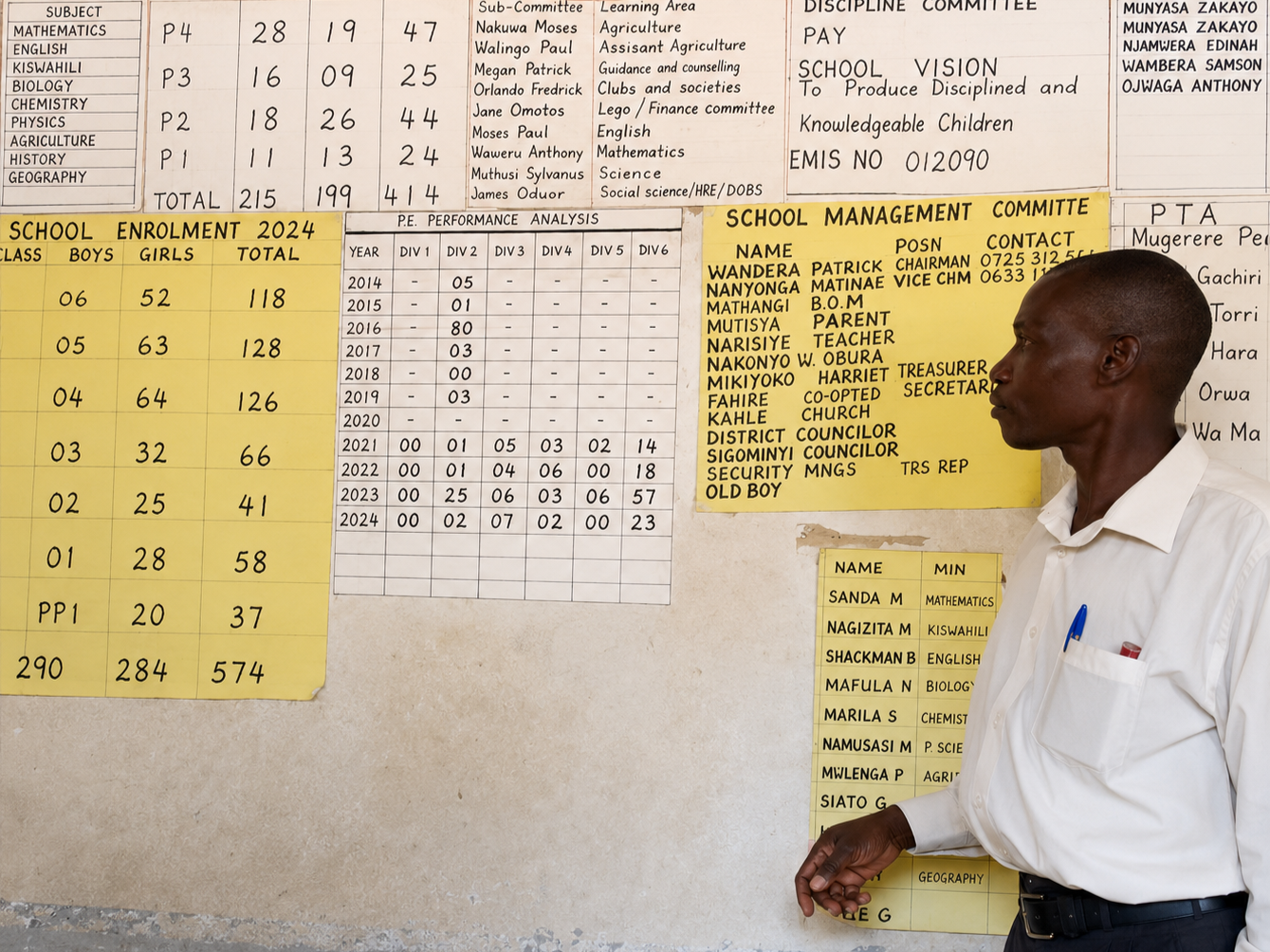
In primary schools in Namayingo District, Uganda, enrollent has risen by between 28% and 474% since 2023—after communities began actively tracking which children had dropped out, speaking directly to parents, and holding local authorities accountable.
Just two years ago, classrooms in parts of Namayingo were steadily emptying. Boys were leaving school to fish, and girls were turning to small trade. Each term, fewer children showed up.
“Because of the economic activities in the community, we were finding it hard to keep pupils in school,” said Mr. Sande Wilberforce, Head Teacher of Lugaga Primary School.
Today, that trend has reversed. Children who had dropped out are returning. Classrooms are filling again. This shift came from communities themselves — organising, tracking, and taking action.
Catalyzing change through community accountability
In 2024, with support from Education Out Loud, GPE’s fund for advocacy and accountability in education, the Civil Society Budget Advocacy Group (CSBAG), the Initiative for Social and Economic Rights (ISER) and the Uganda Society for Disabled Children (USDC) began working together at national and subnational levels to ensure communities were directly involved in monitoring education services and holding decision makers accountable. As part of this work, the organizations helped establish Participatory Budget Clubs (PBCs) across three districts in Uganda.
These clubs are made up of citizens trained to monitor school attendance, conditions and education service delivery, track education spending and raise issues directly with authorities. In total, 90 groups were established, covering 12 schools. Their starting point was simple: to understand why children were leaving school.
“What monitors found was troubling but familiar: shrinking class sizes because children were leaving school,” said Fatuma Kyomuhangi, Local Government Focal Person for the project.
Turning evidence into action
The findings of the budget clubs were presented in community dialogues that brought together school leaders, parents, local council authorities and district officials. According to Oundo Charles, Chief, Buswale Sub-County, these discussions were often successful in changing the conversation from blame to responsibility. Schools began sharing lists of pupils who had dropped out, and community leaders committed to following up with parents and guardians. Local leaders, parents, and PBC members worked together to identify why children were leaving school and how to bring them back.
“The clubs also launched targeted awareness campaigns, emphasizing the right to education and the dangers of child labor. Local leaders and police joined the effort, working to enforce attendance and protect children’s rights,” said Ivan Gando, member of the PBC in Namayingo.
Sensitization campaigns during budget conferences and community meetings reinforced these messages, while local leaders and the police supported efforts to discourage child labor and strengthen school attendance.
“The community is now united and focused on ensuring that all children are going to school. This has come from the efforts to empower citizens through school monitoring and information sharing in community dialogues,” Ivan Gando adds.
Addressing long-standing barriers
According to CSBAG, Namayingo experiences poverty levels higher than the national average, historically low learning outcomes, and severe socio-economic challenges. These conditions contributed to children leaving school to take on income-generating activities, making sustained community engagement essential. The approach taken by the PBCs was therefore not a one-time intervention, but a continuous process of monitoring, dialogue and follow-up with families.
“They looked at challenges, including performance, engaged parents, and guided and counselled them. Bringing parents on board to change their mindset was crucial in making this transformation possible,” said Ouma Godfrey, District Education Officer of Namayingo District.
From action to results
The results are now visible. According to CSBAG monitoring reports, enrolment across the 12 schools has increased from 1,317 students in 2023 to 2,270 in 2025—a 72% rise overall, with some schools seeing even sharper increases, as much as 474%.
Academic outcomes are also improving: Lugaga Primary School recorded its first-ever Grade 1 pupil—the highest result in Uganda’s Primary Leaving Examinations—and, for the first time, zero pupils in Grade U (the lowest category).
“These experiences show that when communities are empowered with information and platforms for dialogue, they can play a critical role in getting children back to school and retaining them there,” says Musa Mugoya, ISER.
Participatory Budget Clubs continue to operate in Namayingo and in two other districts. Beyond enrolment, they are supporting efforts to reintegrate pregnant girls and adolescent mothers into school and to address other barriers to education access.