
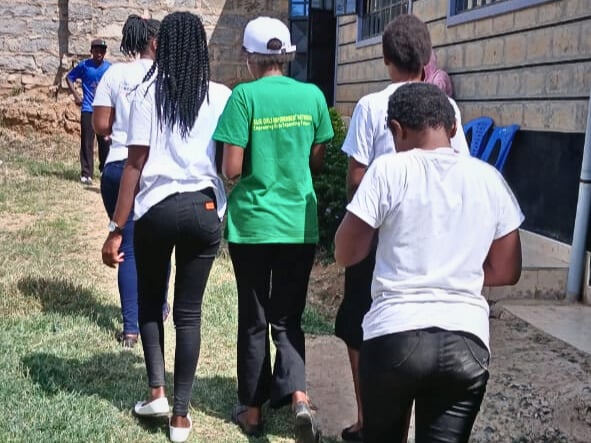
Nash’ story: “I was so young and I didn’t know”
Nash is 17 years old and spending six months at Osiligi Girls Rescue Center, learning new skills she hopes will help her return to school someday. She dreams of building a different future for herself than the one she stepped into while still just a child. Her wish now is that younger girls will not feel the same pressure to follow customs they don’t fully understand, and to marry before they are ready.
Read more…
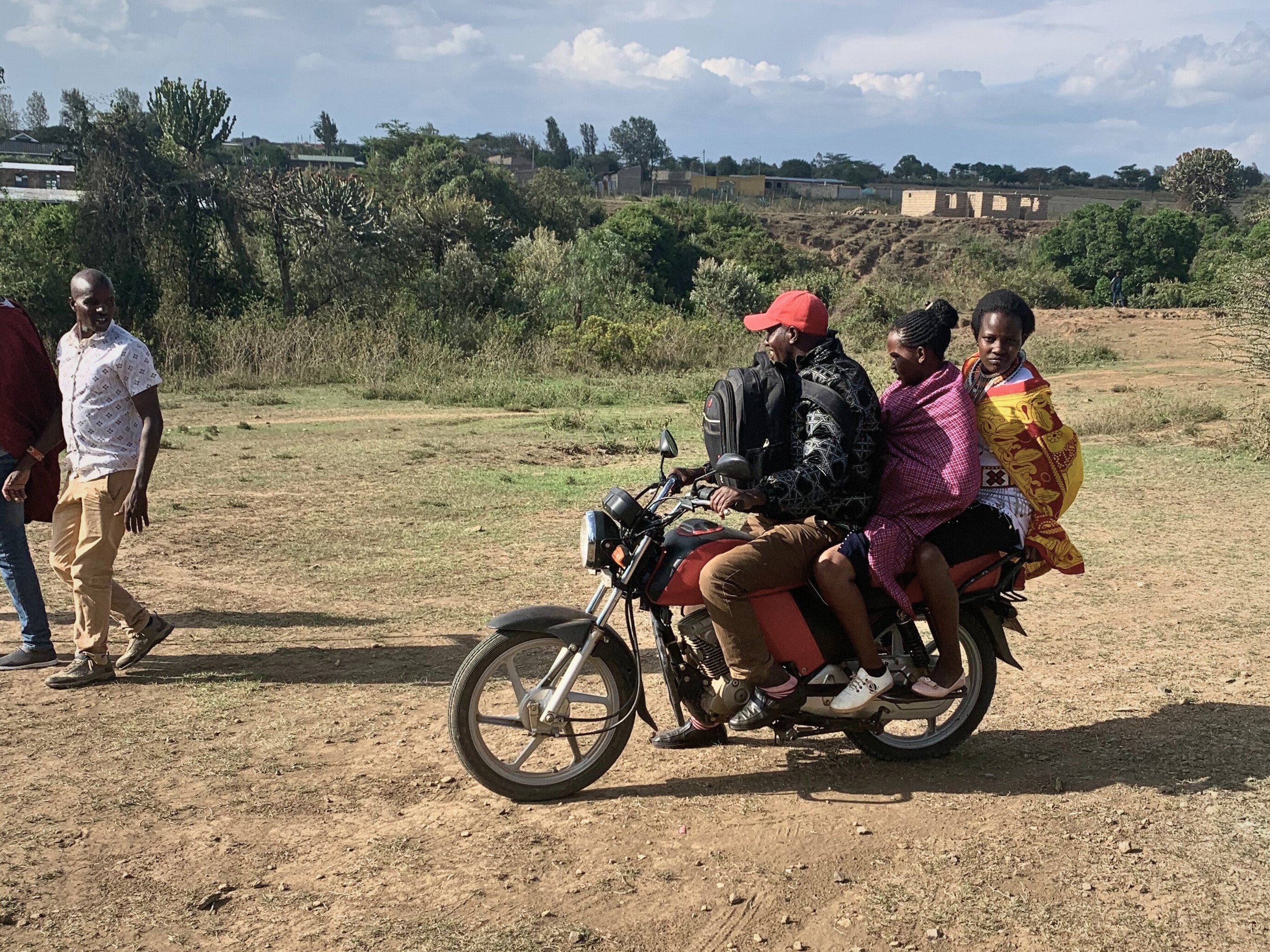
On the Rough Roads to Rescue: How Girls in Narok Find Their Way Back to School
On battered roads and against deep-rooted traditions, local advocates fight to bring girls safely back to school. Travel with us to Narok in Kenya, where Elimu Yetu members are combatting forced marriages and discrimination against women and girls.
Click to read the article
Nash grew up in a village where most girls followed the same path. “I went through FGM, and after circumcision, they told me I am now a woman,” Nash explained. “Even if I was not very old, 12 years at the time, they said I can do all the duties of a wife. And I thought I wanted that – not to be a child anymore.”
Her father and brothers were ready to marry her off right away, but Nash’s mother insisted she return to school. She herself had only a few years of schooling, but through meetings in the village she had learned there was another path – that her daughter could benefit a lot from continuing her education and postponing marriage for a couple of years. But Nash did not understand her mother’s efforts.
“The first year, I followed her wish. But when I came home after grade 7, I found almost all my friends had already been married,” she remembered.
Nash had made up her mind that she would not go back to school. She wanted to marry. And when her father accepted a man she liked, instead of the older one he had in mind for her, then it was decided. Nash was excited at first, but married life quickly became overwhelming. She became pregnant immediately and before she reached the age of 16, she was a mother of two. “I was too young. I had my husband, my children, all the responsibilities, all the work, and I didn’t know anything… it was too much.”
She tried escaping her new life and going to her parents’ home, but they refused her and sent her back.
“I blamed myself so much,” she said, “for leaving school and starting a family so young. I blame myself, but I also blame those who keep us in ignorance and push us when we are too young to know anything.”
This could have remained her story — a life set too early, with no way back — but Nash had been lucky in one thing: she had chosen a good husband.
Her husband is 31 and shaped by the same community that celebrates FGM and sees marrying off young girls as normal. But watching his wife struggle gave him a new perspective. When civil society activists began coming to community meetings to talk about women’s rights and the value of educating girls, he decided to act. “He chose to help me continue my education,” said Nash.
At first, she thought she might be able to go back to her old school and finish her primary education, but even with her husband agreeing to look after the children and standing against a community loudly resisting the idea, the couple couldn’t find the money for school fees.
“So, when I was offered to come here to Osiligi, I was happy to accept. I have six months now to build my skills in braiding, beadwork and sewing, and I learn about family planning and many other things that will help me in the future,” said Nash.
She hopes to use her new skills to make an income and be able to cover the school fees, and that Osiligi will be her stepping stone back to formal education. “There is a lot of resistance from the family, but that is my wish, and as long as my husband supports me, I don’t care what the community says,” says Nash.
(Nash is not her real name but a name she has chosen to protect her privacy and be able to herself decide who she can trust with details of her story and journey)