
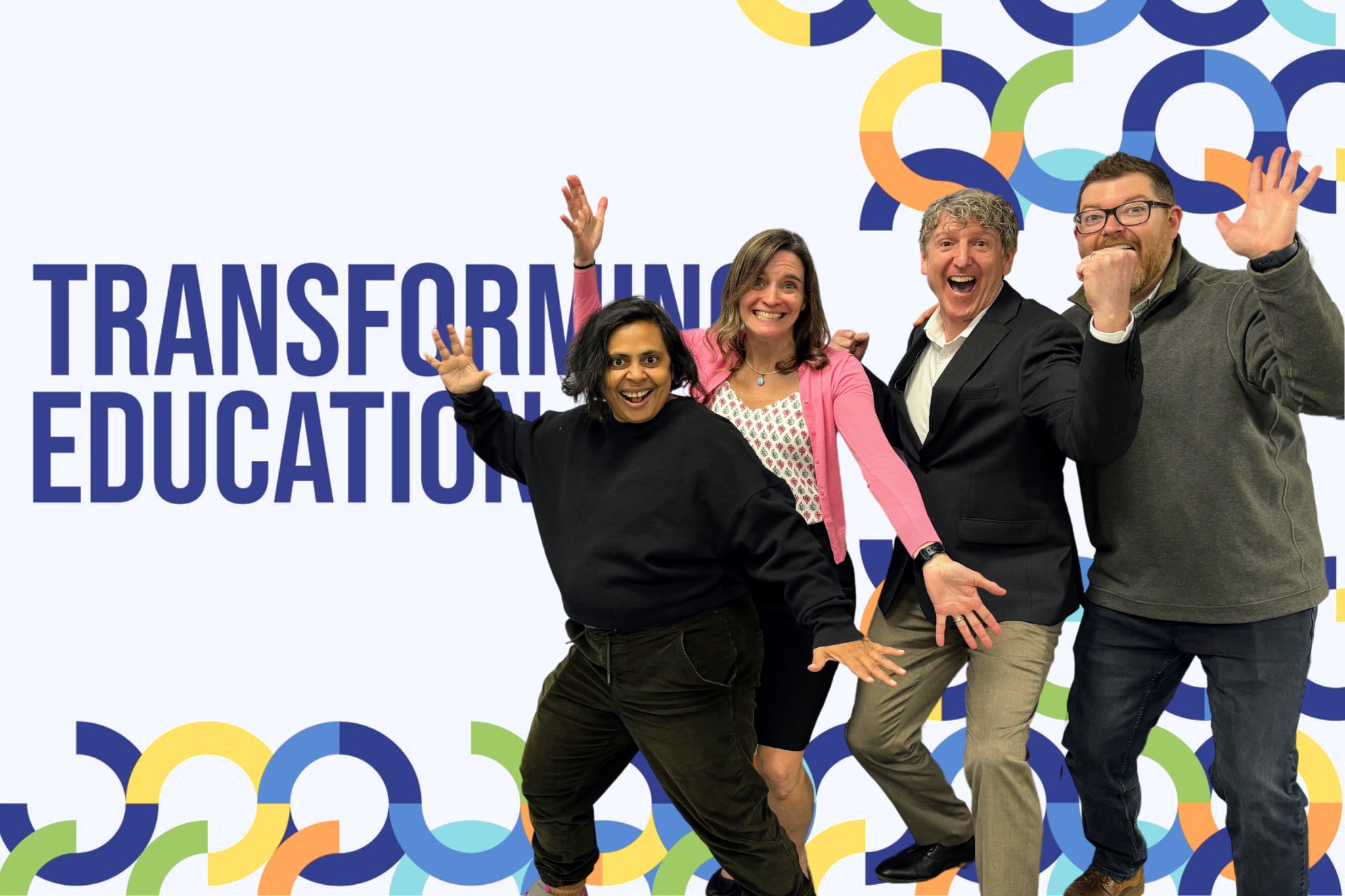
Meet Learning Partner – University of Minnesota
Real advocacy power emerges when civil society combines rigorous research with creative, accessible outputs. As a Global Learning Partner to Education Out Loud, the University of Minnesota works with grantees to aggregate and share research, and to coproduce advocacy-ready tools.
Civil society organisations working on education advocacy face persistent challenges, including limited data on gender equality and social inclusion; difficulty in systematically reviewing and using evidence; weak digital connectivity to promote advocacy in some regions; and difficulty integrating initiatives across local, national, and regional levels.
“While many civil society organisations are doing important work, these constraints make it harder to produce and use consistent, persuasive evidence for policy engagement and more difficult to exercise advocacy power,” says Matthew Schuelka, Senior Researcher at the University of Minnesota.
Anchoring advocacy in rigorous, relevant research
The University of Minnesota (UMN) is a large public university known for its strong commitment to research, education, and public service. Within the university, the College of Education and Human Development focuses on education, gender equality, and social inclusion, and works with partners worldwide.
As a Global Learning Partner to Education Out Loud, the University of Minnesota works with grantees and coalitions to address various challenges by anchoring lived advocacy experience in relevant, rigorous research. UMN aggregates and analyses existing data on gender equality and social inclusion, synthesising patterns in conceptualisation, implementation, and policy influence, and ultimately helps feed these insights directly into learning processes and advocacy outputs.
“Our role is to support education coalitions to make better use of the evidence they have,” explains Joan De Jaeghere, Professor at the UMN. “That means analysing existing data, creating spaces for reflection and peer learning, and coproducing outputs that are advocacy-ready and grounded in the realities of civil society work,” she adds.
From evidence to action
One concrete example is the advocacy brief on boys and gender transformative education published in May 2025. The brief responds to a gap identified by Education Out Loud grantees, who observed higher learning poverty and weaker reading outcomes among boys compared to girls, but lacked the data needed to confirm and nuance this picture.
“The advocacy brief provides civil society organisations with a clear evidence base to engage governments, and it offers a foundation for dialogue with national education coalitions, teachers, parents, and young people on boys’ needs and on dominant norms around masculinity,” says Aditi Arur, Assistant Professor at Christ University, India, and lead author of the brief.
Another example is an advocacy brief on gender transformative education for climate justice and a related series of learning engagements with members of the Latin American Campaign for the Right to Education (CLADE). Over the course of 2025, these exchanges enabled coalition members to reflect on evidence and examples from the Brief, share evidence and experiences within their own organisation and contexts, codevelop advocacy strategies, and lay the groundwork for a regional statement, multimedia cases, and learning resources to be shared across the region and within the Education Out Loud network.
Amplifying existing strengths within civil society
“We focus on making research useful for advocacy, grounded in what coalitions are experiencing and doing,” says Nancy Pellowski Wiger, Senior Researcher at the UMN. “Coalitions like CLADE are already leading powerful rights-based advocacy and have vibrant youth and gender working groups and policy platforms. The members also have strong creativity and an appetite for media-based advocacy that can help democratise knowledge and move it into policy and practice. Our support focuses on amplifying these strengths.”
Looking ahead, the University of Minnesota’s role as Global Learning Partner will focus on deepening this work across several connected strands.
- One strand centre on building practical advocacy skills through an online Media for Advocacy Lab. The three-module programme will support national education coalitions to strengthen storytelling, media fundamentals, and campaign design, using low-bandwidth tools. It will also attend to how advocacy stories focus on structures and social justice reforms related to gender equality and social inclusion.
- Another strand, Community Voices, Inclusive Futures, could potentially include in-country workshops with Education Out Loud partners and CLADE members to co-design multimedia advocacy campaigns, culminating in regional showcases.
“We’re looking forward to continuing the journey with education coalitions and to seeing how their ideas, evidence, and creativity translate into meaningful change,” says Matthew Schuelka.