How civil society advocacy made school feeding more inclusive in Rwanda
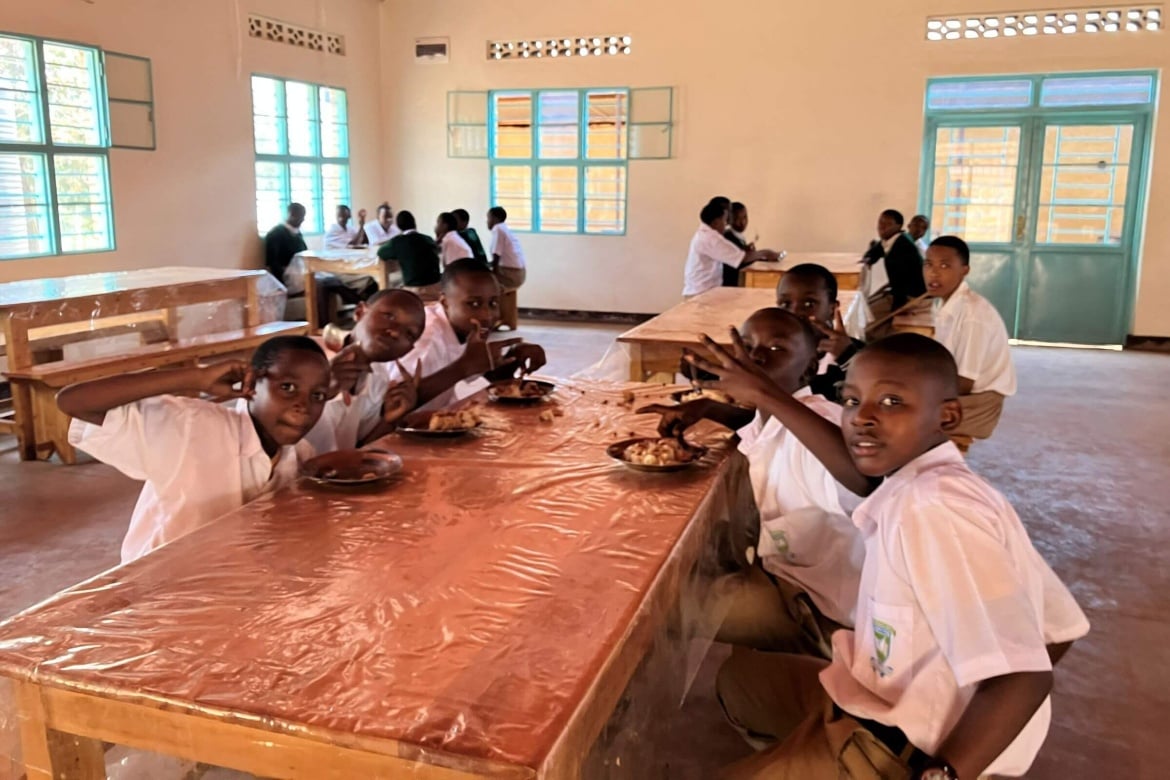
Once, many children left school at lunchtime because their families could not afford to contribute to school meals. Today, an expanded program—shaped by sustained civil society advocacy—is helping ensure every child can stay in school, eat and learn.
At lunchtime, the playground at GS Mburabuturo Pre-Primary, Primary and Secondary School in Kicukiro District, on the outskirts of Rwanda’s capital Kigali, once showed a stark contrast. Some learners headed to eat, plates in hand, while others quietly left the school grounds—often walking long distances home in the hope of having a meal that was not always guaranteed.
Since 2002, school feeding has been an important strategy for the government to address hunger and improve access to education for vulnerable children. As noted in Rwanda’s 2019 national school feeding policy (reviewed in 2024), “A hungry child cannot grow, cannot learn, and faces many health risks in the future.”
Yet the program initially did not reach all learners. Families were expected to contribute a small fee, which placed pressure on households with limited income. According to civil society, including the Rwanda Education for All Coalition (REFAC), many children remained excluded. “In 2019, learners whose families could not pay for lunch had to either go hungry or miss classes to eat. Many did not return after lunch, resulting in dropout rates of nearly 25% at GS Mburabuturo,” says Mathias Sindayigaya, the school’s head teacher.
Advocacy driving change
Through coordinated research, sustained advocacy and policy dialogue, REFAC and its member organizations worked to ensure no learner would be excluded from school feeding. Supported by Education Out Loud, the coalition brought together stakeholders—from government ministries to local leaders— to push for increased government budget for school feeding.
“Our research, presented in March 2023, highlighted how one nutritious meal a day can improve academic performance by up to 20%,” says Joseph Runezerwa, Executive Director of Child First Initiative and a REFAC member. “Investing in school feeding is investing in Rwanda’s future.”
Change came in 2021. The school feeding budget rose from 22.1 billion Rwanda Francs in 2021/22 to 90 billion in 2023/24 enabling the program to reach all learners in public schools. Family contributions were reduced to less than one dollar per term, making participation more accessible.
Impact in schools and communities
“At GS Mburabuturo, the impact has been remarkable,” says Sindayigaya. “Dropout rates fell from 25% to just 10% by 2024. Parents tell us they feel reassured knowing their children eat and learn in good conditions.”
Students have also felt the difference. “I no longer worry about food during the school day—I can focus on my lessons,” says Benie, a secondary school student. “Before, I used to go home at lunchtime, but sometimes there was no food,” adds Jacques, also a secondary school student. For families already struggling with school fees, uniforms and other basic needs, daily meals at school bring stability and motivation.
Teachers have witnessed the change as well. “All students are now in class after lunch, attentive and ready to learn,” says Clarisse Uwitonze, a primary school teacher at GS Mburabuturo. “We no longer deal with interruptions caused by children leaving to look for food.”
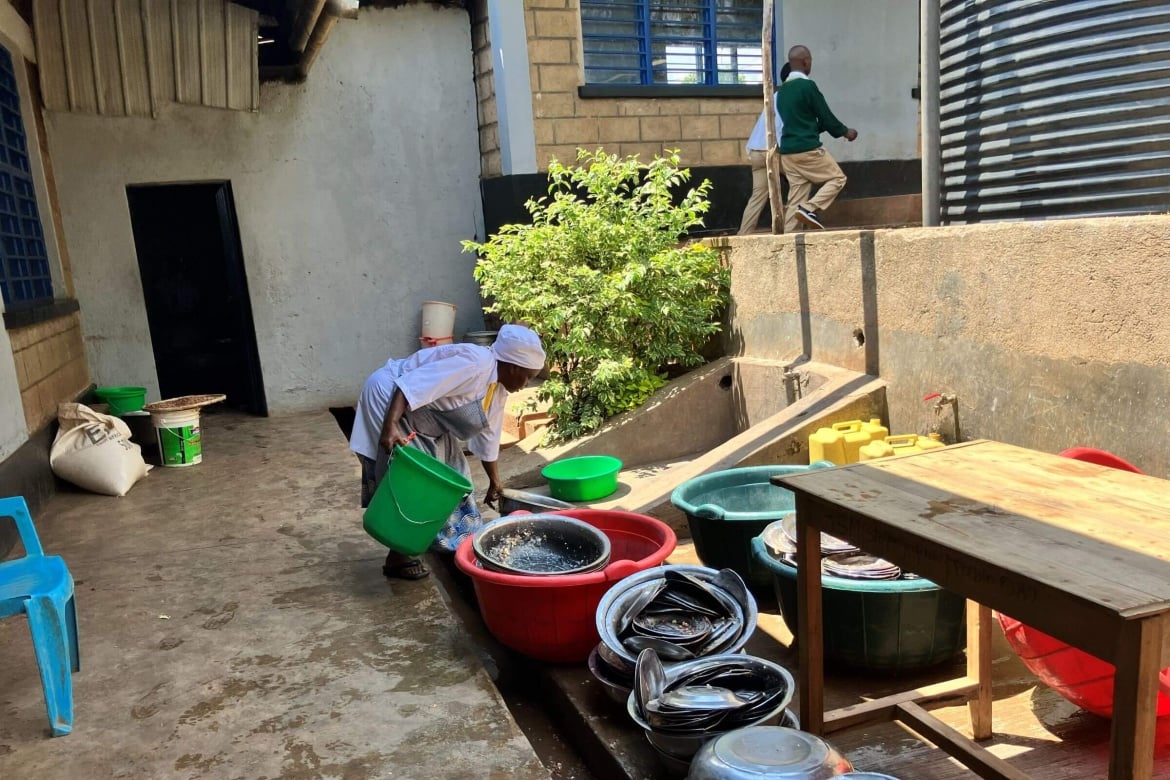
For Bizimana, the school cook, the shift is equally meaningful. “Before, only children whose parents could pay were able to eat. Others went the whole day without a meal,” he recalls. “Now, no child goes hungry.”
From policy to sustained impact
REFAC’s advocacy approach, supported by Education Out Loud, links evidence, dialogue and monitoring. The coalition conducts research and school level surveys to identify gaps in implementation, brings this evidence into policy dialogues and position papers with the Ministry of Education and other stakeholders, and supports follow up through monitoring, trainings and capacity building with schools and local actors. This work extends beyond school feeding to broader inclusion priorities, including assistive devices, learning materials and accessible infrastructure for learners with disabilities.
Looking ahead, REFAC plans to strengthen the program further. “We will continue to engage government, district authorities and communities to ensure the program is fully inclusive and leaves no family behind,” says Benson Rukabu A., National Coordinator of REFAC. “We also advocate for expanding local sourcing of nutritious foods to empower smallholder farmers and enhance program sustainability, alongside stronger health and nutrition monitoring to support long-term outcomes.”
At the school level, REFAC continues to amplify the voices of educators and communities. “We are advocating for investments in dining halls, kitchen facilities and support for families who still struggle to meet even minimal contributions,” Rukabu adds. “This ensures every child can benefit with dignity.”
A model for inclusive policy change
Rwanda’s expanded school feeding program highlights the impact of strong, coordinated civil society advocacy in shaping education policy and monitoring results. By linking evidence with sustained engagement and accountability, coalitions like REFAC are helping ensure that policy commitments translate into real change for children, families and communities.