
A Global Declaration with a Civil Society Fingerprint: How Education Advocates Shaped the Fortaleza Declaration
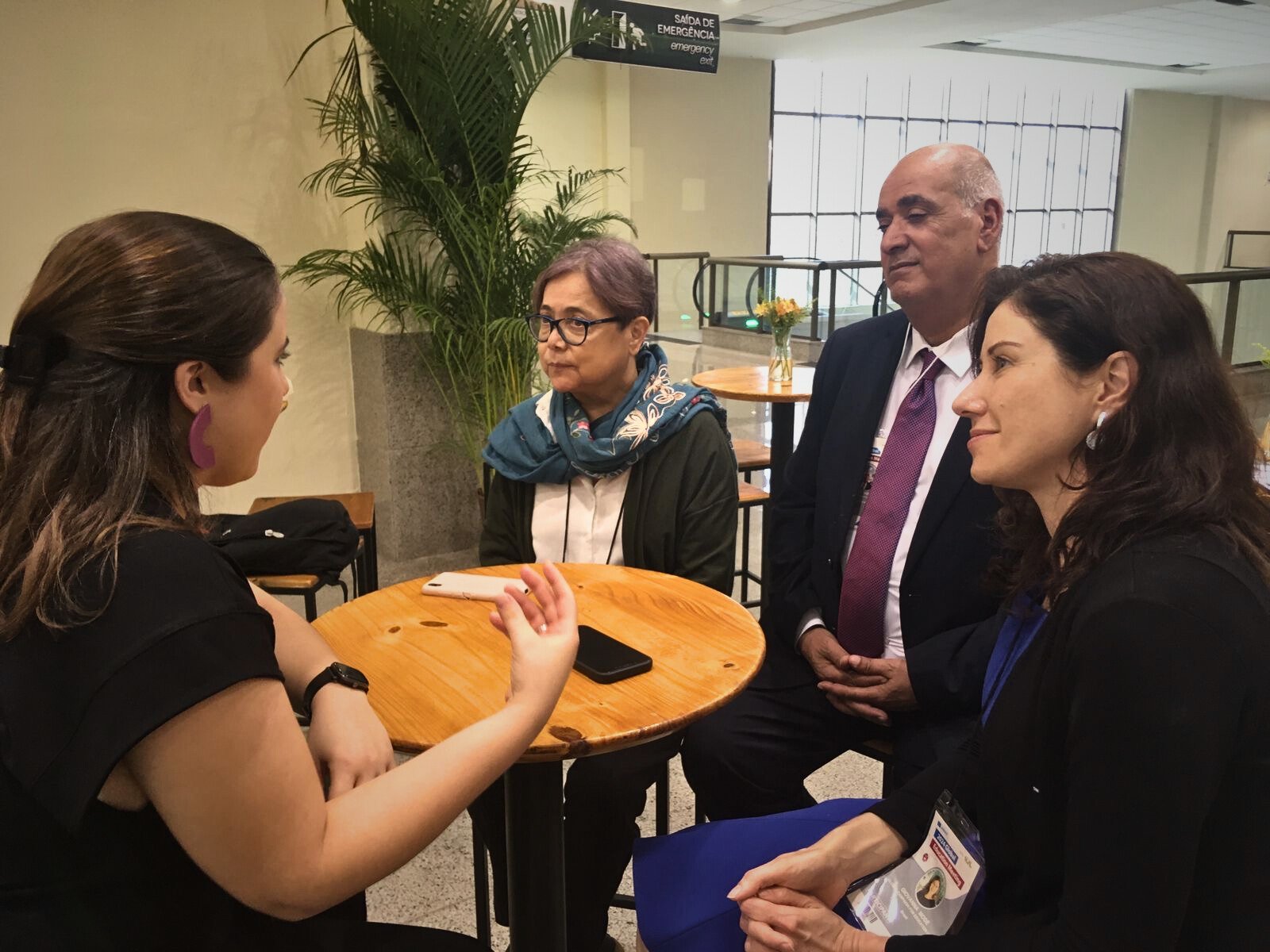
The Global Campaign for Education’s movement fingerprint on the Fortaleza Declaration from 2024 is celebrated as a win for civil society and a positive outcome of the support from Education Out Loud to GCE. We spoke with Nelsy Lizarazo from CLADE and Giovanna Modé from GCE, about why the Declaration matters, and how it came together at a critical political moment.
At the conclusion of the 2024 Global Education Meeting in Fortaleza, Brazil, representatives from governments, civil society, youth organisations and the teaching profession adopted the Fortaleza Declaration, marking a pivotal moment in the global fight for equitable and quality education.
Behind the scenes, years of coordinated advocacy by civil society, including GCE and regional members, helped shape a global policy document that is already being used as a powerful tool for education advocacy worldwide.
The meeting was the first Global Education Meeting held in the Global South and the first since the COVID-19 pandemic and took place at a time when education systems worldwide were under immense pressure. Against this backdrop, the Declaration sets out a shared political vision for accelerating progress towards Sustainable Development Goal 4 and keeping education firmly framed as a human right.
“While the Declaration is non-binding, its political weight lies in the fact that it represents a global consensus. For us, shaping this Declaration was about defending core principles and setting clear red lines,” says Nelsy Lizarazo, CLADE’s coordinator and GCE Vice-president and CSO representative in the SDG4 Sherpa Group during 2024-2025.
When did GCE decide to focus on influencing the Declaration?
“We identified the Declaration as a priority as soon as UNESCO announced the Global Education Meeting. Declarations are now drafted before the meeting rather than negotiated behind closed doors during it. That means civil society needs to influence much earlier and much more strategically, always seeking a broader alliance so that proposals gain more traction,” says Nelsy Lizarazo.
Through our role in the Collective Consultation of NGOs and the SDG 4 High Level Steering Committee, we were responsible for coordinating the civil society consultation globally. This meant working closely with all CCNGO constituencies, INGOs and regional coalitions such as CLADE, ANCEFA, ACEA and ASPBAE, who mobilised national education coalitions to identify priorities and inputs.”
What were the key issues civil society wanted to see included?
“There were three major areas where we focused a lot of energy,” says Giovanna Modé from GCE.
- The first was education financing, with an emphasis on public financing for public education, domestic resource mobilisation and tax justice.
- The second was digital transformation, where we pushed strongly for a human right based and regulated approach, not just access to technology.
- The third was equity and inclusion, including lifelong learning, adult education, gender transformative education and the protection of schools in emergencies.
Overarching was a very clear rights-based entry point. Education must be framed as a human right, and that principle needed to be consistent throughout the document.
“We systematised all civil society inputs into a single concise position paper, drafted drawing on extensive consultations held with all CCNGO constituencies. That became our main advocacy tool, a common position that we could defend consistently at global, regional and national levels,” Giovanna Modé adds.
Where did negotiations become most difficult?
“Financing and digitalisation were the most sensitive points,” says Nelsy Lizarazo. “There were very different visions around the table. For us, national education budgets must be safe, progressive, protected, sufficient, and sustainable over time, in line with States’ obligations to progressively realise the right to education. In all cases, they should strengthen public education systems. Some actors promote public private partnerships and results-based financing. We argued that when financing is tied to outcomes, those who are already disadvantaged are the ones most likely to lose out, increasing inequalities.
This was not a voting process, so it was about constant negotiation, pushing back, clarifying language and insisting on coherence with human rights principles. The final Declaration is not perfect. However, we did manage to include critical safeguards, such as language stating that unsustainable debt cannot be accepted in education, as well as strong references to public budgets for public education, tax justice and regulation.
But what matters is whether the final document strengthens or weakens our ability to push for change. In this case, it clearly strengthens it.”
How is the Declaration being used now?
Nelsy Lizarazo: “We are already seeing the Fortaleza Declaration used as a strategic advocacy tool – we have fed the outcomes back to national and regional education coalitions and are continuously working with them on how best to use the Declaration for national and local advocacy. The document sets a minimum standard that governments have publicly endorsed, and civil society organisations can point to it and say to ministers, you agreed to this.
At the global level, the Declaration will also play an important role in shaping future discussions – UNESCO has already indicated that future consultations will build on it, making it a key reference point for what comes next.”
Where is the GCE and its members fingerprint visible in the final Declaration?
Giovanna Modé: “There is a strong framing of education as a human right, clear references to tax justice and public financing, and a strong focus on teachers. The Declaration also includes commitments to lifelong learning, including adult education, and to equity, with attention to marginalised groups. Importantly, it also includes a reference to the participation of civil society as a principle. This was not included in the first draft, but it mattered greatly to us.
One of the biggest lessons from this process is that many voices saying the same thing, adapted to their context but aligned in substance, can have real impact. This achievement belongs to the entire education movement. It shows that when civil society is organised, strategic and persistent, it can leave a lasting mark on global education policy.”