Renforcer la résilience grâce à l’éducation au changement climatique dans le Pacifique.
La montée du niveau des mers et les phénomènes météorologiques extrêmes déplacent des populations, endommagent des infrastructures vitales et menacent la sécurité alimentaire. Face à ces défis croissants, l’éducation est mobilisée pour renforcer la résilience climatique et permettre aux élèves de s’adapter à un monde de plus en plus marqué par la crise climatique.
Dans cet article, Alanah Torralba, partenaire d’apprentissage et spécialiste de la transition juste, explore le potentiel de l’éducation face au changement climatique pour renforcer les capacités des élèves, des enseignants et des communautés à agir dès aujourd’hui. Les habitants des îles du Pacifique posent ainsi les bases d’un avenir durable et juste.
À l’école primaire de Boera, qui compte plus de 400 élèves dans la province centrale de Papouasie-Nouvelle-Guinée, les élèves et leurs familles ressentent les effets du changement climatique dans leur vie quotidienne. Boera est située au bord de la mer et risque de disparaître en raison de l’élévation du niveau de la mer. Les élèves, les enseignants et les membres de la communauté sont de plus en plus inquiets, car le village montre déjà des signes de destruction imminente.
“Il fait parfois si chaud que nous ne pouvons pas envoyer les enfants faire des activités en plein air. Nous sommes en saison sèche, mais il fait trop sec. C’est maintenant que nous ressentons vraiment les effets du changement climatique », a déclaré l’enseignante Andrea Pokiton. En été, une sécheresse prolongée a affecté l’approvisionnement en eau et a aggravé les conditions déjà difficiles dans les salles de classe, les infrastructures étant incapables de résister aux conditions météorologiques extrêmes et aux effets climatiques à évolution lente.
D’après l’UNICEF, les chocs climatiques constituent une menace importante pour le droit à l’éducation dans le monde entier. En Asie du Sud, la région la plus touchée au monde, 128 millions d’élèves ont subi des perturbations dans leur apprentissage en raison du climat. Parallèlement, 118 millions d’élèves du Bangladesh, du Cambodge, de l’Inde, de Thaïlande et des Philippines ont été touchés par des vagues de chaleur extrêmes. Étant donné que la plupart de ces élèves vivent dans des pays à faible revenu ou à revenu intermédiaire inférieur, le changement climatique risque d’aggraver la crise de l’apprentissage et d’accroître les inégalités de revenus et entre les genres.
L’éducation : un outil puissant dans la lutte contre le changement climatique
Selon la Banque mondiale, l’éducation est le facteur le plus important pour sensibiliser au changement climatique. Lorsque les éltudiants et leurs communautés acquièrent des connaissances approfondies sur le sujet, ils prennent conscience de la crise climatique, changent leur état d’esprit et adoptent des comportements durables. L’éducation au changement climatique peut également stimuler l’innovation et encourager les éltudiants à s’impliquer davantage dans les activités civiques liées à l’action climatique. Elle permet également de préparer les élèves à intégrer les économies durables émergentes en leur permettant d’acquérir des compétences écologiques.
Cependant, bien que l’éducation soit un outil puissant pour lutter contre le changement climatique, elle est négligée. Dans le domaine du financement climatique, seuls 1,5 % des fonds ont ainsi été consacrés à la formation sur le climat, ce qui affecte le déploiement de programmes éducatifs essentiels dans ce domaine à travers le monde, selon la Banque mondiale.
À l’échelle mondiale, les gouvernements ont tardé à mettre en œuvre des programmes d’éducation sur le changement climatique. Dans une enquête menée en 2021 par l’UNESCO, si 92 % des plans du secteur de l’éducation et des cadres curriculaires mentionnaient des thèmes environnementaux, la plupart ne le faisaient que de manière superficielle.
Le changement climatique a rarement été abordé en profondeur, moins de 20 % des enseignants ayant intégré de manière modérée l’éducation au changement climatique dans leur enseignement. De plus, le changement climatique était souvent intégré dans des matières générales liées à « l’environnement ». Parallèlement, un tiers des enseignants interrogés ont déclaré que la formation des enseignants était insuffisante, les contenus liés au climat étant absents de la formation initiale et continue des enseignants.
Pour le Pacifique, cela signifie que, bien que le public soit relativement sensibilisé au changement climatique, il manque une approche intégrée de l’éducation à la crise climatique. Cela signifie également que le potentiel de l’éducation pour renforcer la résilience climatique reste inexploité.
Vers un programme d’enseignement sur le changement climatique transformateur dans le Pacifique
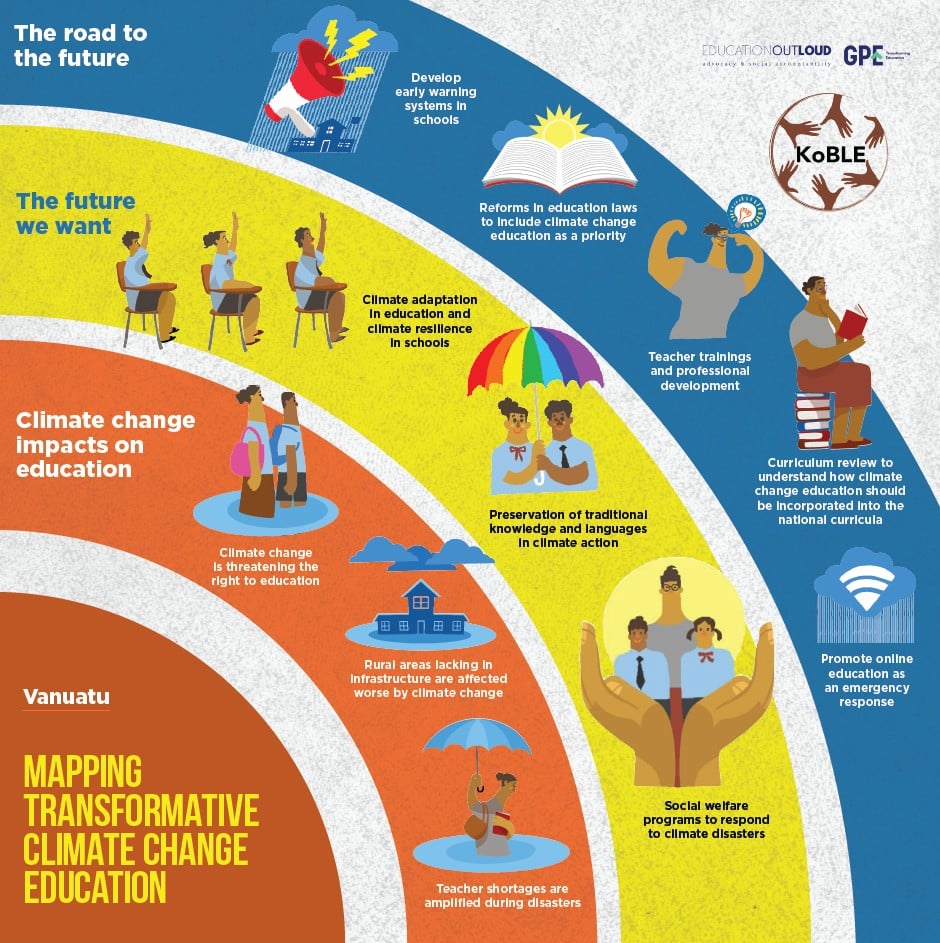

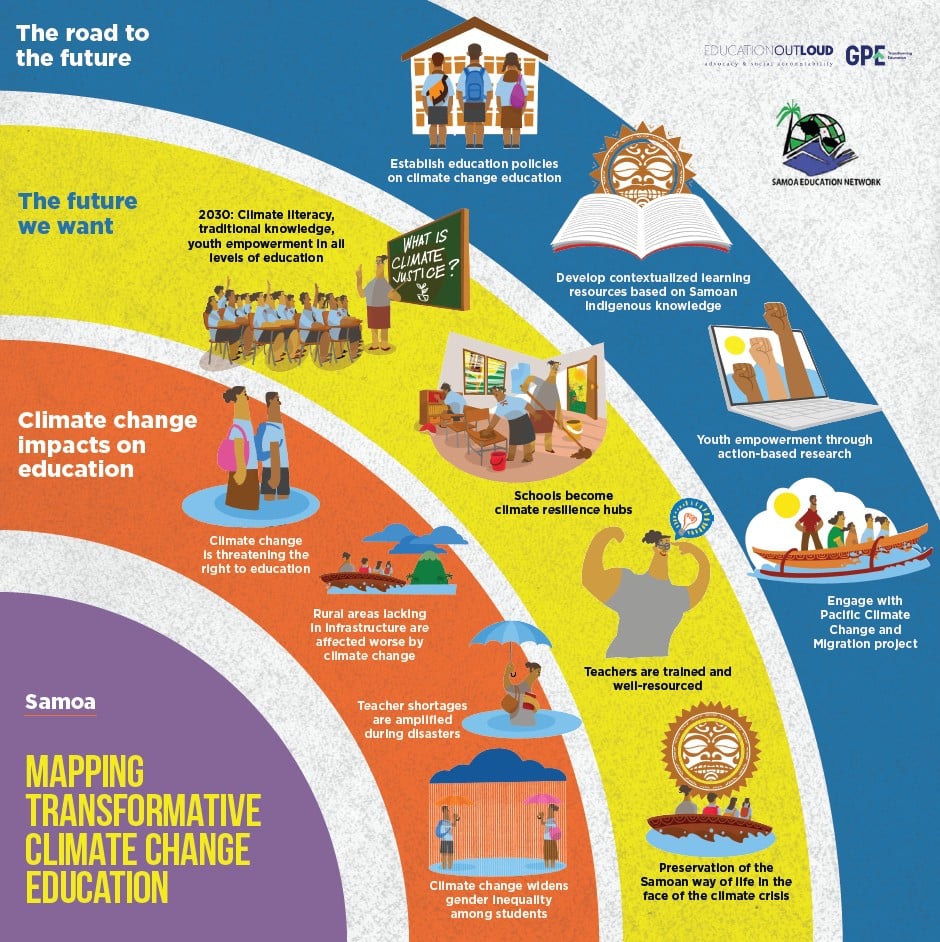
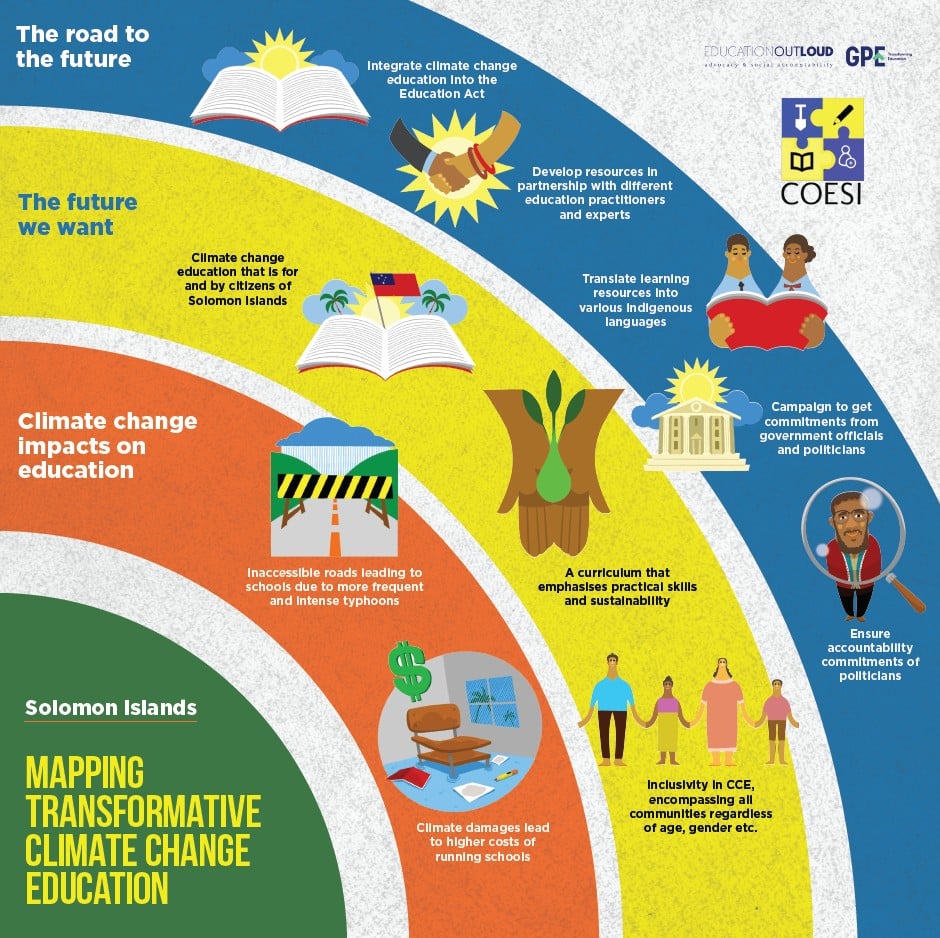
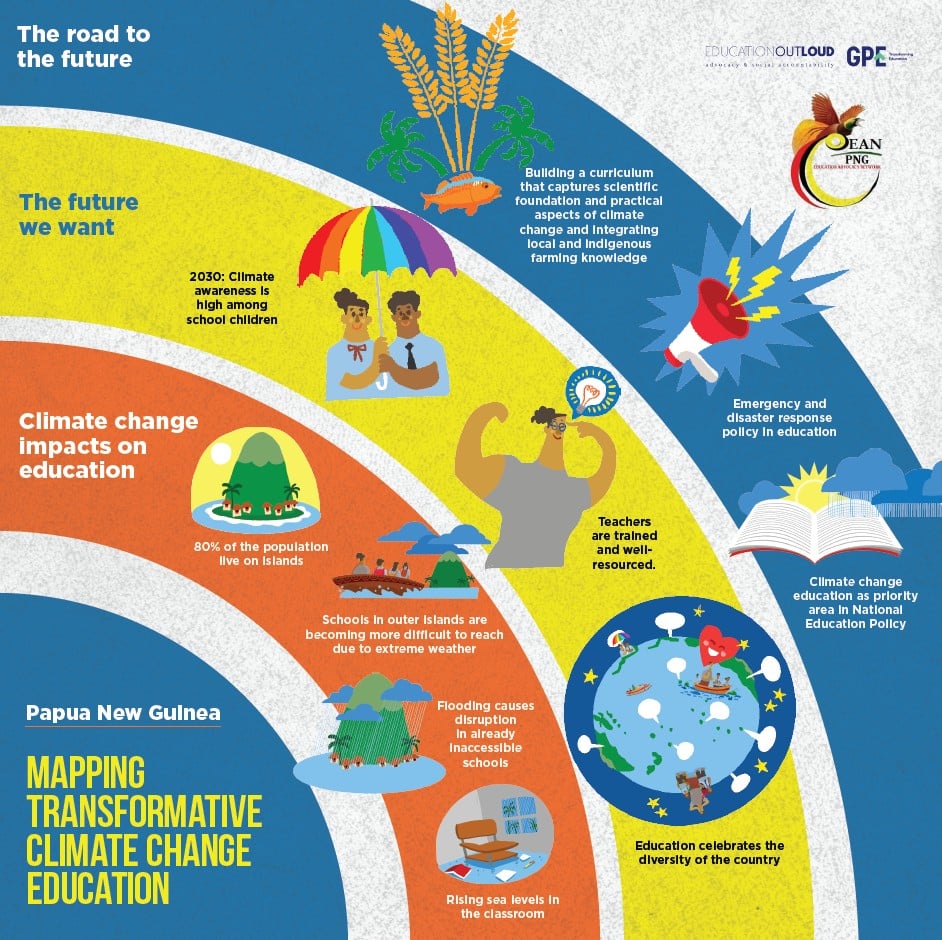
La crise climatique met en évidence le besoin urgent de mettre en place des systèmes éducatifs résilients et de modifier les programmes scolaires pour enseigner plus efficacement le changement climatique. Malgré les réalités du changement climatique dans le Pacifique, le secteur de l’éducation n’est pas encore mobilisé en faveur de l’action climatique. Les ressources allouées à l’enseignement sur le changement climatique sont insuffisantes, notamment pour la formation des enseignants et la fourniture de matériel pédagogique à jour. Face à cette situation, plusieurs coalitions nationales pour l’éducation dans la région du Pacifique ont commencé à faire de la promotion de l’éducation au changement climatique l’un des axes principaux de leurs efforts de sensibilisation.
Parmi celles-ci figurent le Papua New Guinea Education Advocacy Network, le Samoa Education Network, le Kolisen Blong Leftemap Edukesen (KOBLE Vanuatu) et la Coalition for Education Solomon. Au total, cinq coalitions pour l’éducation, dont la coalition régionale ASPBAE, se sont réunies dans le cadre du projet Education Out Loud Pacific Learning Collaborative afin de promouvoir des changements significatifs et de partager des stratégies en vue d’un programme d’éducation au changement climatique dans la région.
Au Vanuatu, KOBLE collabore actuellement 30 organisations de la société civile au sein de leur coalition dans des discussions sur l’éducation au changement climatique et la justice climatique. PEAN en Papouasie-Nouvelle-Guinée a commencé à dispenser des formations aux enseignants sur le climat et participe à divers événements de la société civile liés à la promotion de la sécurité dans les écoles, notamment sur le stress thermique dans les salles de classe. COESI, aux Îles Salomon, a organisé des discussions avec le ministère de l’Éducation et les parties prenantes dans les écoles sur la manière dont le changement climatique est actuellement enseigné dans les écoles. SEN, au Samoa, a organisé une séance de débriefing entre ses membres et a partagé ses enseignements avec d’autres membres de l’organisation, tout en menant une action de sensibilisation auprès des jeunes et de la communauté.
Conscientes que l’éducation au changement climatique dans le Pacifique nécessite l’allocation de ressources spécifiques, les coalitions pour l’éducation prévoient de s’engager davantage dans la promotion d’un programme d’enseignement sur le changement climatique qui réponde aux besoins et aux aspirations des élèves, des enseignants et de leurs communautés.
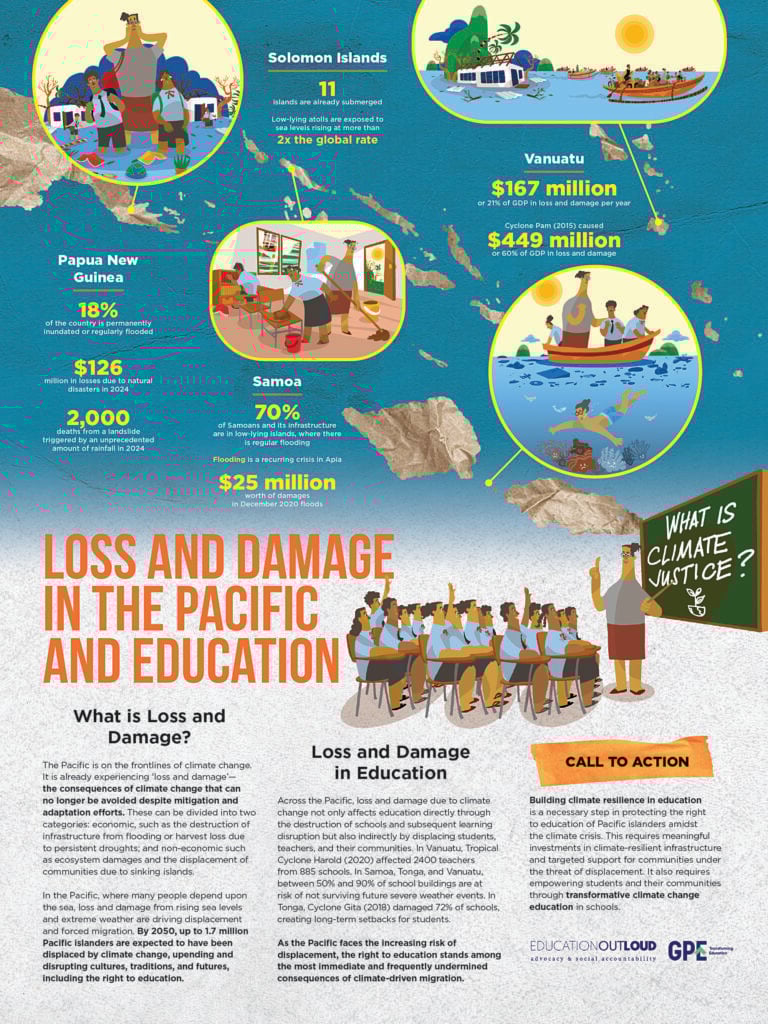
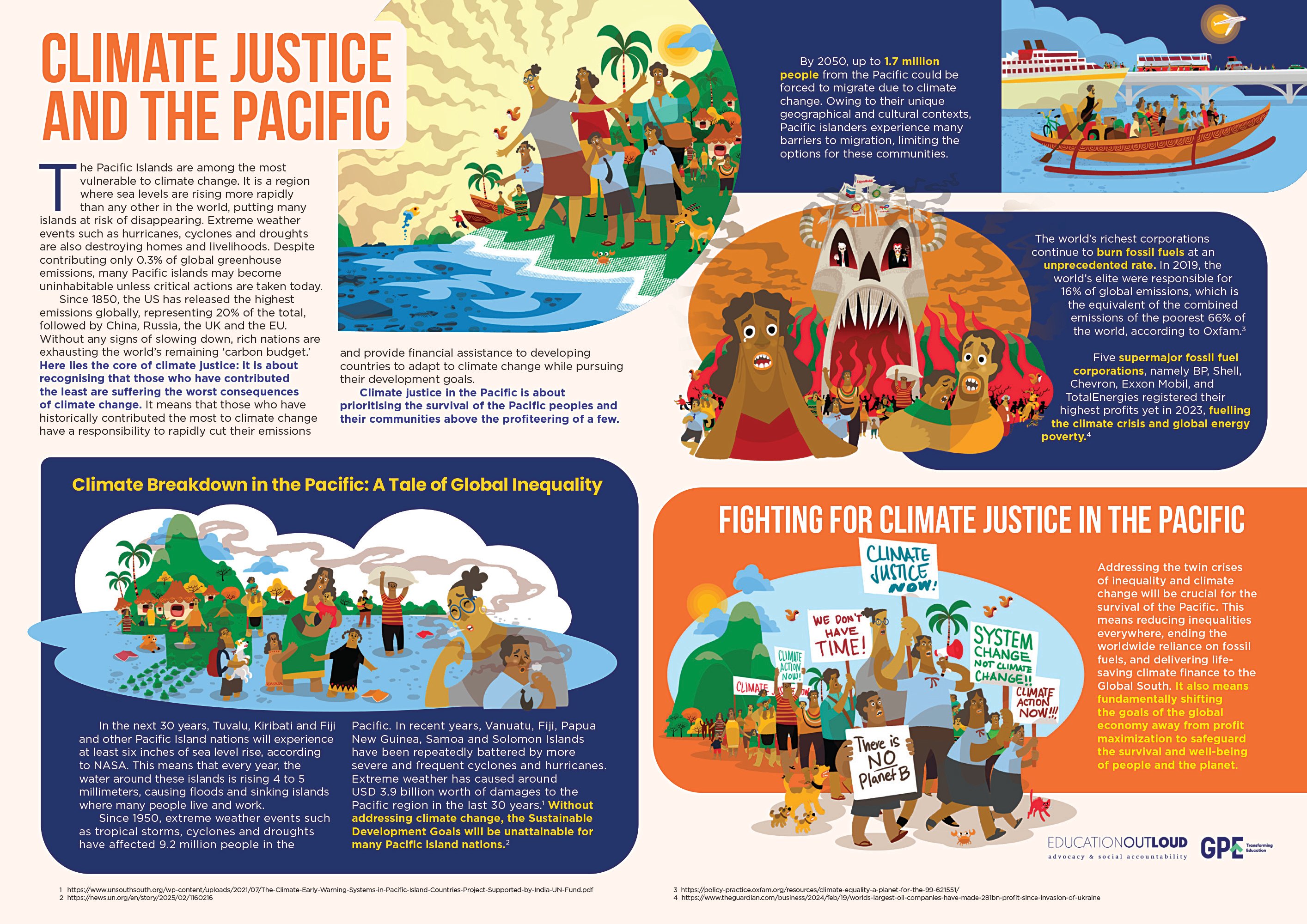
Le collectif a également produit des ressources pratiques qui peuvent être partagées au-delà des coalitions participantes. Il s’agit notamment de supports pédagogiques tels qu’une cartographie des approches transformatrices en matière d’éducation au climat et des infographies sur la justice climatique et la question des pertes et dommages dans le Pacifique, autant d’outils qui peuvent soutenir les efforts de plaidoyer dans toute la région. En outre, une enquête d’évaluation de référence a été élaborée afin d’identifier les compétences, les connaissances et les besoins en matière de renforcement des capacités des coalitions nationales pour l’éducation en ce qui concerne la promotion de la justice climatique dans le secteur de l’éducation.

Ces résultats constituent une base pour renforcer les initiatives en matière d’enseignement sur le changement climatique et peuvent être utilisés par d’autres bénéficiaires de subventions et acteurs de la société civile engagés dans ce programme.
Le Collaboratif d’apprentissage sur l’éducation au climat dans le Pacifique
- Le Collaboratif d’apprentissage sur l’éducation au climat dans le Pacifique est une initiative d’Education à Voix Haute visant à renforcer le leadership de la société civile dans les efforts de sensibilisation à l’enseignement au changement climatique.
- Grâce à diverses activités, notamment le développement des médias, la collaboration en ligne et un atelier en présentiel, les principales parties prenantes et les défenseurs de la cause dans le Pacifique ont renforcé leurs capacités en matière de sensibilisation à l’éducation au changement climatique.
- Ce collaboratif sert également de plateforme pour partager les meilleures pratiques et engager un dialogue réfléchi avec les étudiants, les enseignants et les membres de la communauté sur les conséquences alarmantes du changement climatique pour le secteur de l’éducation.
- Apprenez plus sur léducation au climat
– Apprentissage interrompu : aperçu mondial des perturbations scolaires liées au climat en 2024 (UNICEF)
– Guide pour des programmes scolaires écologiques (UNESCO)
– Choisir notre avenir : l’éducation pour l’action climatique (Banque Mondiale) - Le Collaboratif d’apprentissage du Pacifique : ressources
– Enquête d’évaluation de référence sur les compétences, les connaissances et les besoins en matière de renforcement des capacités des coalitions nationales pour l’éducation en relation avec la promotion de la justice climatique dans le secteur de l’éducation.r.
– Cartographie des approches transformatrices de l’éducation au climat Vanuatu, Samoa, Îles Salomon et Papouasie-Nouvelle-Guinée
– Infographies sur la justice climatique et la question des pertes et dommages dans le Pacifique — outils de plaidoyer et de communication.