
Pourquoi le financement de l’éducation ne peut plus être dissocié de la dette et de la justice fiscale
Réunies au sein d’un collaboratid d’apprentissage, des organisations de la société civile issues de 18 pays africains ont élaboré une approche commune en matière de plaidoyer pour le financement de l’éducation. Cette approche place l’allègement de la dette et la justice fiscale au cœur de la lutte pour une éducation publique de qualité.
« Tout pays consacrant davantage de ressources au service de la dette qu’à l’éducation devrait bénéficier en priorité d’une restructuration et d’une annulation de sa dette. » Ce défi a été au cœur des discussions lors de la réunion finale du collaboratif sur le financement de l’Education à Nairobi, dans le cadre de la Semaine mondiale d’action pour l’éducation 2026. Il reflétait une évolution plus large intervenue au cours des 18 derniers mois : aller au-delà des seuls budgets de l’éducation pour examiner les systèmes politiques et économiques plus larges qui déterminent si les gouvernements sont en mesure d’offrir une éducation de qualité et équitable pour tous.
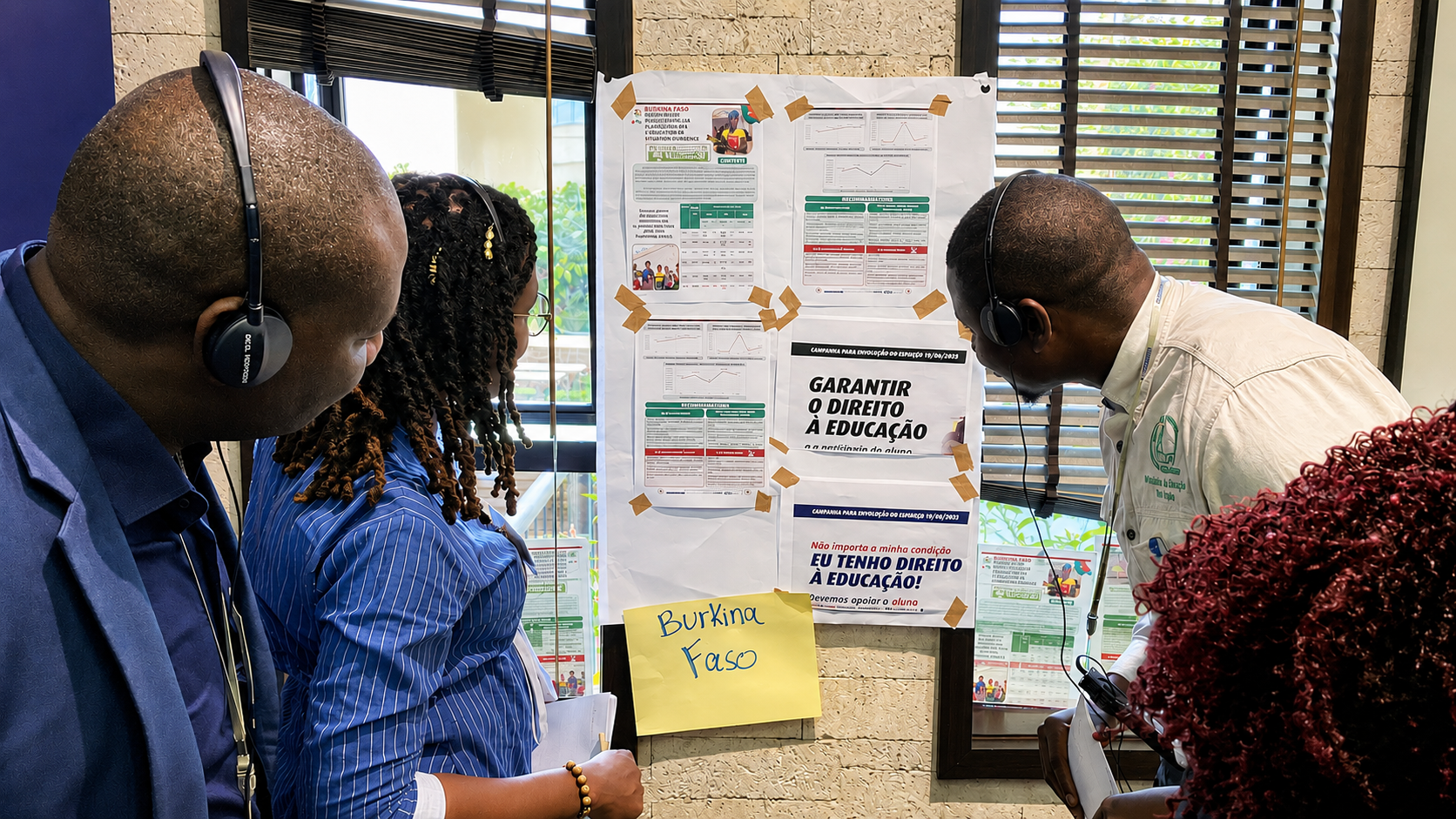
Au cours des 18 derniers mois, des coalitions nationales pour l’éducation et des organisations de la société civile issues de 18 pays africains se sont réunies dans le cadre d’un collaboratif d’apprentissage sur le financement de l’éducation, animé par Action Aid, l’un des partenaires d’Education Out Loud. L’objectif était de renforcer le plaidoyer fondé sur des données factuelles en faveur d’un financement accru, plus équitable et plus durable de l’éducation publique. Grâce à des formations en ligne, à la recherche-action, à des échanges entre pairs et à une réunion finale en présentiel à Nairobi, les participants ont examiné non seulement le montant des dépenses consacrées à l’éducation par les gouvernements, mais aussi les facteurs plus larges qui déterminent le financement de l’éducation.
Quand l’endettement prend le pas sur l’éducation
Ce parcours a débuté en 2023, lorsque les bénéficiaires du programme Éducation à Voix Haute, issus de la région de l’Afrique de l’Ouest et centrale, ont identifié un besoin commun : renforcer les capacités de la société civile en matière de financement de l’éducation et approfondir la compréhension des forces politiques et économiques qui façonnent les budgets de l’éducation à travers le continent. Comme l’a souligné Cheikh Mbow, de la Coalition nationale pour l’éducation du Sénégal (COSYDEP) : « Malgré la diversité des contextes linguistiques et nationaux, le financement de l’éducation a été identifié comme un défi universel. »
Le contenu de ce groupe de travail sur l’apprentissage s’appuyait sur le cadre des 4S développé par ActionAid, dont les concepts de « partage » (Share), de la« taille» (Size), de « sensibilité » (Sensitivity) et de « contrôle » (Scrutiny) ont aidé les participants à mieux comprendre non seulement l’importance du montant alloué à l’éducation, mais aussi si ces montants sont suffisants et répartis de manière équitable afin de garantir efficacement une éducation gratuite, de qualité et inclusive.
Les discussions initiales ont porté sur les indicateurs de référence en matière de financement de l’éducation ; toutefois, au fur et à mesure que les débats avançaient, il est apparu clairement que le service de la dette absorbait une part croissante des budgets nationaux. Dans toute l’Afrique subsaharienne, les pressions liées à la dette s’intensifient rapidement. Certains pays consacrent désormais jusqu’à quatre fois plus de ressources au service de la dette qu’à l’éducation. Comme l’a souligné Diana Mochoge, du Réseau africain pour la justice en matière de dette, lors de notre webinaire sur la dette et l’éducation : « Le service de la dette a un impact direct sur l’éducation à travers tout le continent africain, et ce de plusieurs manières très concrètes. »
L’analyse de la situation ougandaise réalisée par le Civil Society Budget Advocacy Group (CSBAG) a mis en évidence l’ampleur du défi. Le service de la dette a absorbé près de la moitié des recettes publiques en 2024/25, tandis que la part du budget consacrée à l’éducation est passée de 8,7 % — un niveau déjà faible — à seulement 6,9 % en l’espace de quatre ans. Le service de la dette a par ailleurs augmenté à un rythme près de deux fois supérieur à celui du budget national global.
Les recettes fiscales qui n’arrivent jamais dans les salles de classe
Le collaboratif a examiné comment des systèmes fiscaux défaillants et injustes limitent les budgets publics, empêchant ainsi les pays de mobiliser les ressources nationales nécessaires pour investir dans l’éducation. Les discussions ont mis en évidence que la lutte contre l’évasion fiscale à l’échelle mondiale, associée à des réformes fiscales progressistes, notamment en matière d’imposition de la fortune, pourrait générer de nouvelles ressources importantes pour les services publics – contribuant ainsi à garantir l’accès à l’éducation à plus de 72 millions d’enfants non scolarisés et à financer le recrutement des 13 millions d’enseignants nécessaires à l’échelle mondiale pour faire face à la crise de la pénurie d’enseignants.
Le collectif a également permis aux coalitions de s’engager davantage en faveur de la justice fiscale. Le MEPT, la coalition nationale pour l’éducation du Mozambique, a partagé son expérience des exonérations fiscales accordées aux mégaprojets, soulignant comment les gouvernements continuent de perdre d’énormes recettes publiques en raison d’incitations fiscales néfastes et de flux financiers illicites, malgré d’importantes richesses en ressources naturelles. L’analyse du MEPT montre l’ampleur considérable des pertes liées aux incitations fiscales néfastes et aux flux financiers illicites, ainsi que leur impact sur le financement de l’éducation. Comme l’a fait remarquer Luis Mutondo : « Les ressources perdues en raison des exonérations fiscales et des flux financiers illicites pourraient financer plus de 63 000 salles de classe. »
De même, SWANCEFA a présenté les travaux menés par l’Eswatini sur la fausse facturation commerciale et le transfert des profits, démontrant comment les multinationales exploitent les failles du système financier mondial pour transférer leurs bénéfices hors des pays africains, ce qui prive ces derniers des ressources qui pourraient servir à financer des écoles, des enseignants et des systèmes éducatifs inclusifs. Thulani Lushaba, de SWANCEFA, a souligné que « l’Afrique dispose des ressources nécessaires ; le défi consiste à faire en sorte que les pays en tirent pleinement parti »
Ce parcours d’apprentissage a également remis en question les idées reçues sur les budgets de l’éducation eux-mêmes. Les sessions consacrées à la « sensibilité » ont permis d’examiner comment les décisions de financement peuvent renforcer ou réduire les inégalités liées au genre, au handicap, à la situation géographique, à la pauvreté ou à l’exclusion. Une réflexion récurrente au sein du collaboratif était que l’inclusion devait être intégrée dès le départ dans les budgets, et non ajoutée a posteriori.
Les participants ont souligné que les budgets consacrés à l’éducation ne sont jamais neutres ; ils déterminent qui bénéficie d’une priorité, qui est exclu et quels besoins restent invisibles.
Parallèlement, les discussions sur le « contrôle » ont renforcé l’idée que l’allocation des fonds ne garantit pas à elle seule leur utilisation effective. Les participants ont examiné comment le suivi communautaire, le suivi des dépenses et les approches de responsabilisation des citoyens peuvent contribuer à garantir que les financements parviennent effectivement aux écoles et aux apprenants, à travers les expériences partagées par le consortium CLEAR du Ghana et l’Adda Girls’ Initiative au Nigeria (qui fait partie de la coalition plus large CSACEFA). Comme l’a fait remarquer Samira Galadima : « L’argent parvient-il réellement dans son intégralité, dans les délais et là où il est nécessaire ? »
Ces discussions ont confirmé que, comme l’ont montré les travaux du COSYDEP sur le pilier « Partage », consacrer 20 % des budgets nationaux à l’éducation ne suffit pas toujours à garantir une éducation de qualité et équitable. Elles ont également mis en évidence l’importance d’initiatives telles que celles menées au Bénin pour identifier les bénéficiaires du financement de l’éducation — et ceux qui sont encore laissés pour compte.
Partir du coût réel de la qualité
Un autre volet important de cette collaboration portait sur l’approche brésilienne du « coût d’une éducation de qualité par élève » (CAQi), qui pose une question simple mais révolutionnaire : quel est le coût réel d’une éducation de qualité ?
Cette approche a permis aux participants de porter un regard différent sur le financement de l’éducation. Plutôt que de partir des contraintes budgétaires existantes, le CAQi s’appuie sur les conditions nécessaires à la mise en place d’une éducation de qualité. Ce faisant, il reflète une approche fondée sur les droits qui part de l’obligation d’utiliser le maximum de ressources disponibles pour concrétiser le droit à l’éducation.
Comme l’a expliqué Adriana Dragone Silveira, de la Campagne brésilienne pour le droit à l’éducation : « La qualité de l’enseignement de masse commence avant même d’entrer en classe, avec des infrastructures, des ressources et des conditions de travail qui permettent à un apprentissage constructif de s’enraciner. »
S’inspirant de cette approche, la Campagne brésilienne a apporté son soutien à quatre membres du collaboratif d’apprentissage originaires du Cap-Vert, d’Eswatini, du Mozambique et de l’Ouganda afin qu’ils testent cette méthodologie dans leurs propres pays. Bien que chaque pays ait adopté une approche légèrement différente, tous se sont inspirés de la même idée fondamentale : il est nécessaire de comprendre le coût d’une éducation de qualité et d’utiliser ces données pour plaider en faveur du niveau d’investissement public requis pour la mettre en œuvre.
Au terme d’un processus qui a duré plus d’un an, les participants se sont récemment réunis à Nairobi. Lors de cette rencontre en présentiel, ils ont estimé que l’un des résultats les plus importants de ce collaboratif d’apprentissage était l’élaboration d’une analyse politique commune établissant un lien entre le financement de l’éducation, la dette, la fiscalité, les inégalités et les luttes plus larges en faveur de la justice économique. Ce processus a confirmé qu’il ne s’agit pas simplement d’augmenter les budgets de l’éducation de manière isolée, mais de comprendre les systèmes qui déterminent si le droit à l’éducation peut devenir une réalité.
Un participant a résumé ainsi l’esprit de cette rencontre : « Nous parlions d’une seule voix. »
L’évaluation finale a fait ressortir des retours extrêmement positifs de la part des participants, 95 % d’entre eux ayant attribué au projet collaboratif la note « grande valeur » ou « très grande valeur ». Beaucoup ont fait état d’évolutions non seulement dans leur compréhension technique, mais aussi dans leur approche du plaidoyer — passant d’un discours fondé sur l’expérience à une action davantage étayée par des données factuelles et alignée sur une stratégie.
La solidarité entre les différents pays et le renforcement des relations sont apparus comme l’un des principaux résultats de ce processus. Comme l’a souligné l’un des participants : « Ce groupe d’apprentissage collaboratif a donné naissance à un réseau d’organisations de la société civile actives dans le domaine du financement de l’éducation. »