
La mobilisation des ressources au sein de la société civile : il est temps de changer de perspective
Voici cinq enseignements clés tirés d’un échange d’expériences organisé à Arusha, au cours duquel des coalitions éducatives venues de plusieurs pays d’Afrique se sont réunies pour repenser le financement de leurs actions de plaidoyer
Les coalitions de la société civile qui militent en faveur de l’éducation connaissent bien le défi : les financements sont difficiles à obtenir, le nombre de bailleurs de fonds est limité et le travail de plaidoyer produit rarement le genre de résultats immédiats et visibles susceptibles d’attirer des subventions. Si l’on ajoute à cela les récentes perturbations qui ont affecté l’aide internationale, la pression exercée sur la société civile pour qu’elle trouve des moyens nouveaux et plus durables de financer son action n’a jamais été aussi forte.
Pour relever ce défi, des coalitions nationales pour l’éducation soutenues par Education à Voix Haute se sont réunies à Arusha, en Tanzanie, en juin, pour une formation sur la mobilisation des ressources. Cette formation s’inscrivait dans le pilier « capacités organisationnelles » parmi les axes d’apprentissage d’Education à Voix Haute — à savoir les capacités organisationnelles, thématiques et de plaidoyer —, dans le but de mettre en place un cadre de ressources fiable et prévisible pour les organisations bénéficiaires. Ces cinq jours ont donné lieu à un parcours plus profond et plus propice à la réflexion que beaucoup ne l’avaient prévu — un parcours qui a remis en question les idées reçues et élargi la compréhension de ce que signifie réellement la mobilisation de ressources.
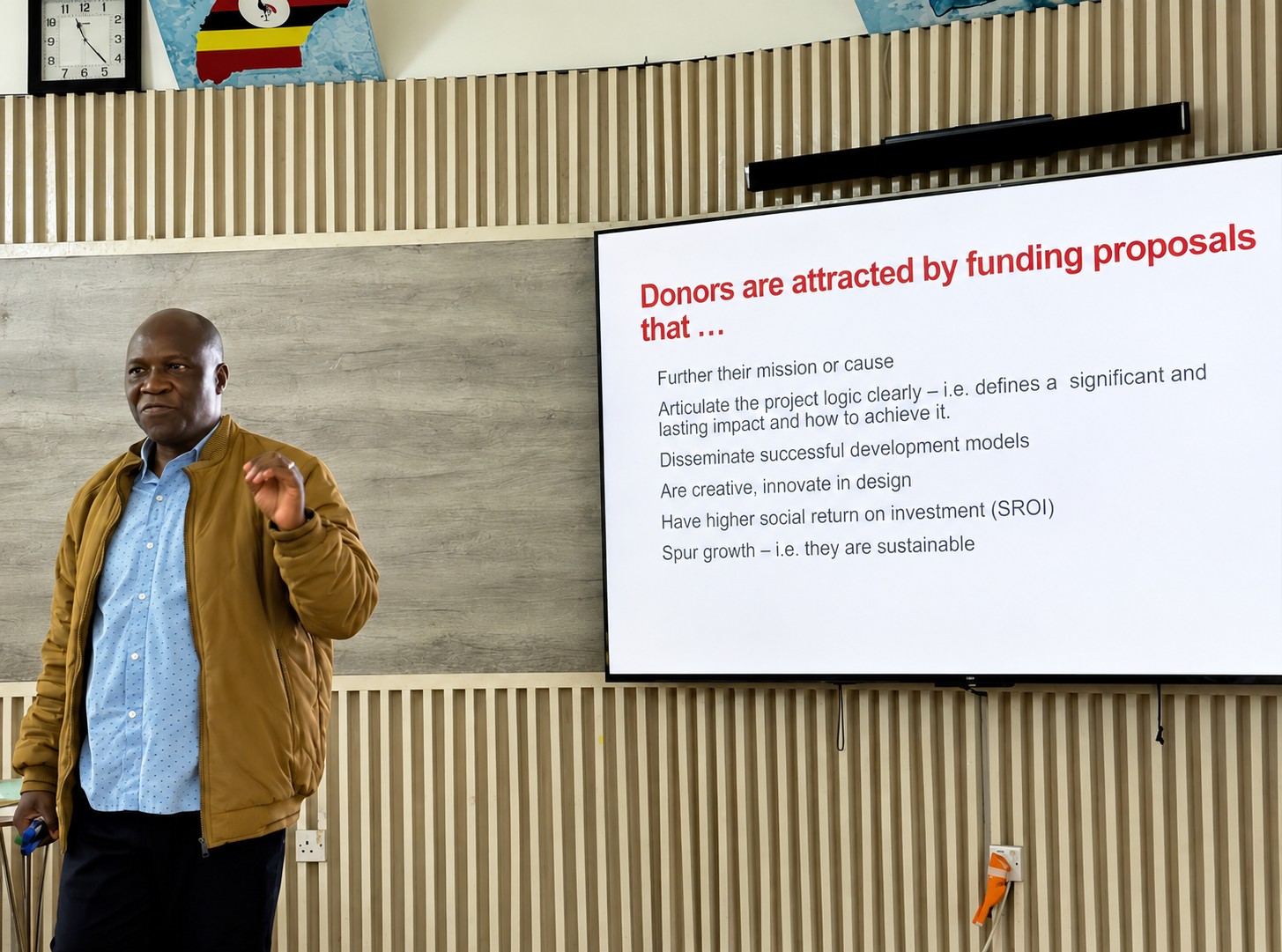
Le Centre de formation MS pour la coopération au développement (MS TCDC) a animé cet événement, au cours duquel les participants ont enchaîné des sessions théoriques, consacrées à l’analyse du paysage du financement des OSC et à l’exploration de nouvelles stratégies de collecte de fonds, avec des sessions pratiques.
Des organisations bien établies et expérimentées ont côtoyé des organisations dotées de structures et de processus plus récents, favorisant ainsi l’interaction et l’échange de connaissances. Les bénéficiaires de subventions ont pu co-créer, en petits groupes formés en fonction de leurs centres d’intérêt, des idées de collecte de fonds en s’appuyant sur leurs propres expériences, une approche qui a enrichi les résultats finaux. Cette expérience a constitué une base utile avant qu’ils ne passent au mentorat virtuel et ne commencent à expérimenter des approches non traditionnelles de financement.
Voici cinq enseignements clés tirés de cet échange.
1. La mobilisation des ressources est un processus — et pas seulement une collecte de fonds
Ce premier recadrage était également le plus fondamental. Plutôt que de considérer le financement comme un objectif en soi, les participants ont été encouragés à réfléchir à la manière dont les organisations mobilisent leurs ressources — les personnes, les idées, les partenariats et les moyens financiers — de manière stratégique et durable. Une phrase résume bien cette idée : mobiliser d’abord les personnes, les ressources ensuite. Cela nous a rappelé qu’au cœur de chaque subvention, partenariat ou contribution se trouve une relation fondée sur la confiance et un objectif commun.
2. Cela doit être intentionnel — et non pas une simple réaction
La mobilisation des ressources ne peut pas être une démarche réactive. Elle doit être intégrée à la stratégie organisationnelle, s’appuyer sur des rôles clairement définis et être guidée par des approches mûrement réfléchies — qu’il s’agisse de l’engagement des donateurs, des partenariats, de la communication ou de la communication numérique. L’objectif est de mobiliser les ressources de manière ciblée afin de mettre en œuvre le plan stratégique, plutôt que de courir après les fonds pour assurer la survie de l’organisation.
3. Ne vous limitez pas à la recherche de subventions traditionnelle
La formation a permis de décortiquer la complexité de l’écosystème du financement, en explorant les flux des ressources à travers les systèmes bilatéraux et multilatéraux, les fondations privées, la philanthropie et la redevabilité sociale des entreprises. Le fait de replacer ces éléments dans le contexte de cadres mondiaux tels que la Déclaration de Paris, le Programme d’action d’Accra et le Programme d’action d’Addis-Abeba a permis de souligner que la mobilisation des ressources n’est pas seulement un travail technique : elle est façonnée par les priorités mondiales, les politiques et les dynamiques de pouvoir. Cela a ouvert la voie à un large éventail d’approches : la création de consortiums et de communautés de pratique, la collaboration avec des partenaires du secteur privé, le développement d’idées d’entreprises sociales et l’exploitation des opportunités locales de collecte de fonds. Ce qui a particulièrement retenu l’attention, c’est l’importance accordée au regard vers l’extérieur : analyser l’environnement, prendre en compte les perspectives externes et explorer des partenariats inattendus.
4. Les consortiums et les collaborations ouvrent de nouvelles perspectives
La constitution de consortiums — c’est-à-dire de coalitions se formant pour solliciter des financements conjointement plutôt qu’en tant qu’organisations individuelles — s’est imposée comme l’une des approches les plus prometteuses. Cela permet d’élargir les capacités, de renforcer la crédibilité et d’améliorer les chances auprès des grands bailleurs de fonds. Plusieurs participants ont quitté Arusha en discutant déjà de possibles demandes conjointes, animés par la volonté commune de dépasser les contraintes et de commencer à sortir des sentiers battus.
5. Les propositions percutantes présentent un argumentaire clair et logique
Les propositions sont souvent évaluées rapidement, ce qui souligne la nécessité de faire preuve de précision et de cohérence dès le départ. Une proposition convaincante ne consiste pas à tout dire, mais à présenter un récit clair et captivant, étayé par une logique et des éléments probants crédibles. Construire une logique solide, des activités aux réalisations, des réalisations aux résultats, jusqu’à l’impact, confère aux propositions la clarté recherchée par les évaluateurs.