
French translation of: From Parakou to Tamale: What we learnt by crossing borders
What you are about to read is a first-hand account of the Pro-RePEM project from members of the OC2 Consortium, DEDRAS-ONG and Social Watch Benin. They travelled to Ghana, where they spent five days working alongside their Ghanaian counterparts in the CLEAR consortium. We hope that this experience will inspire you to cross borders, build bridges and overcome challenges together.
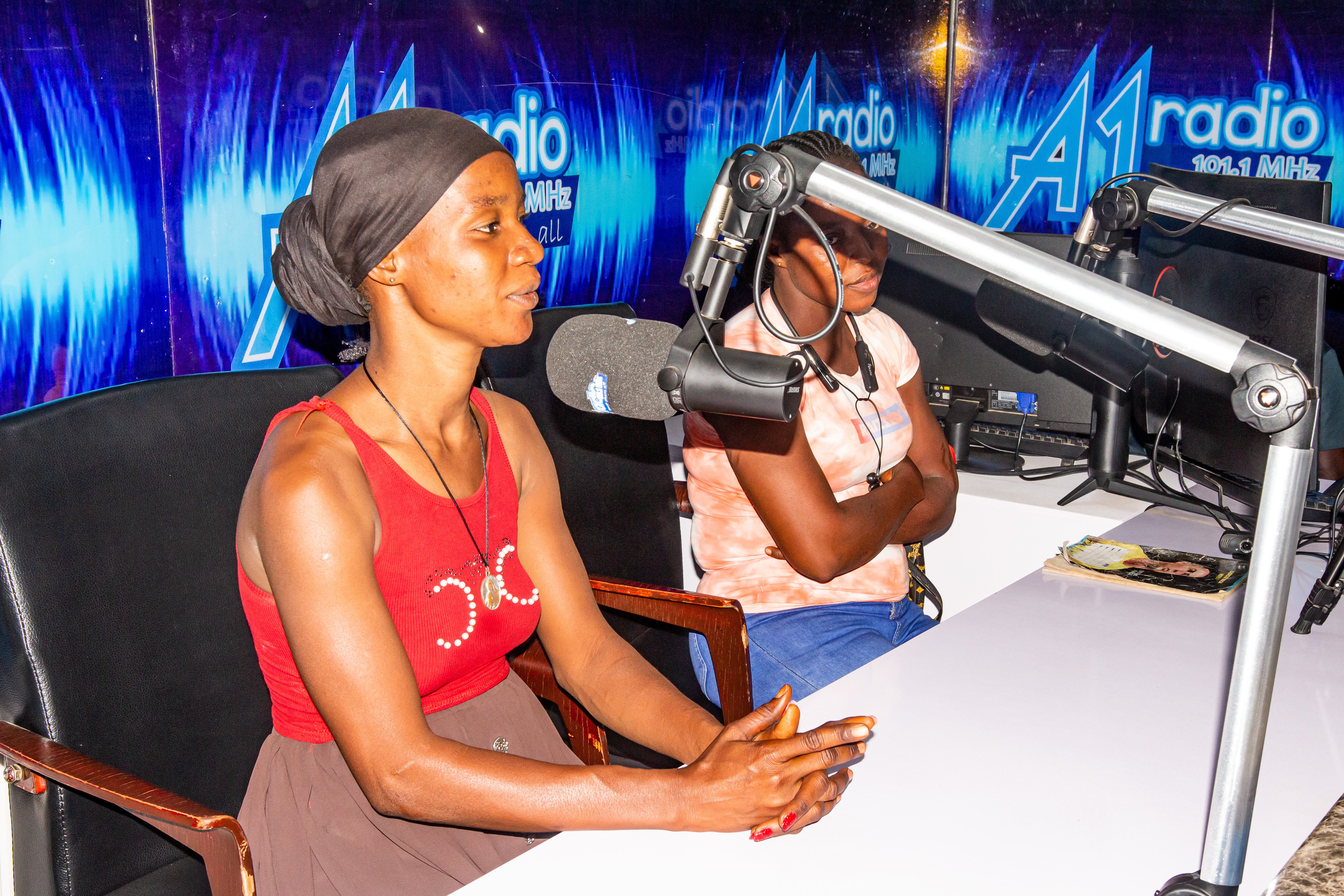
NImagine a seventeen-year-old girl, microphone in hand, in a radio studio in Bolgatanga. She isn’t reading from a script. She is speaking from the heart. She is addressing parents, village chiefs and headteachers. She tells them, with a conviction that stops you in your tracks, that their daughters have the right to go to school — and to stay there. Over 500 km away from Parakou, in far northern Ghana, we discovered that advocacy for education could take the form of a teenage girl and the strength of an entire mobilised community.
Our first day in Tamale began at the School for Life headquarters. Seated around the table were the teams from the three organisations in the CLEAR consortium — School for Life, Youth Empowerment for Life (YEFL) and Ghana Developing Communities Association (GDCA). What struck us immediately was the clarity of their collaboration: each organisation knew exactly what it was doing, why it was doing it, and how it coordinated with the other two.
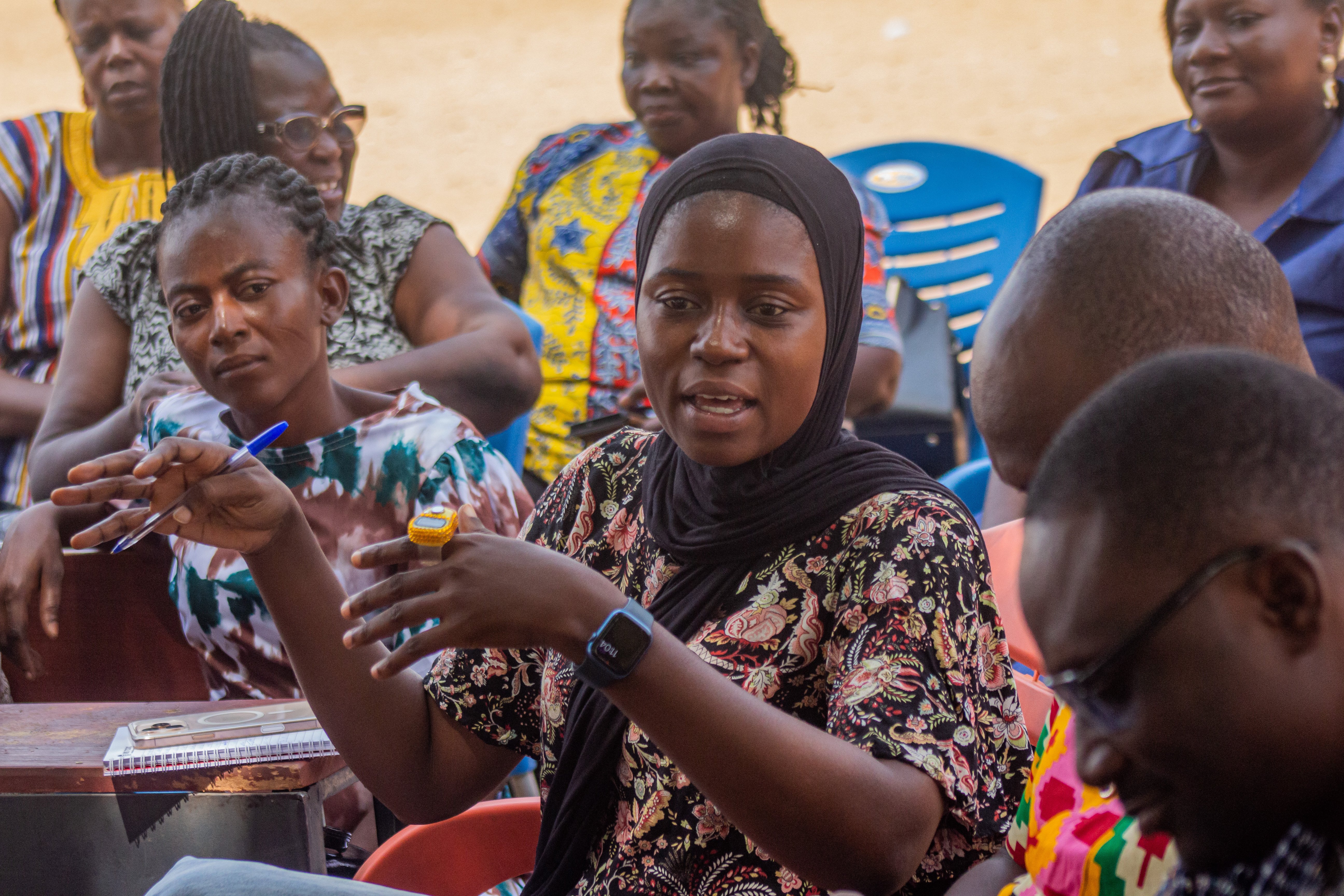
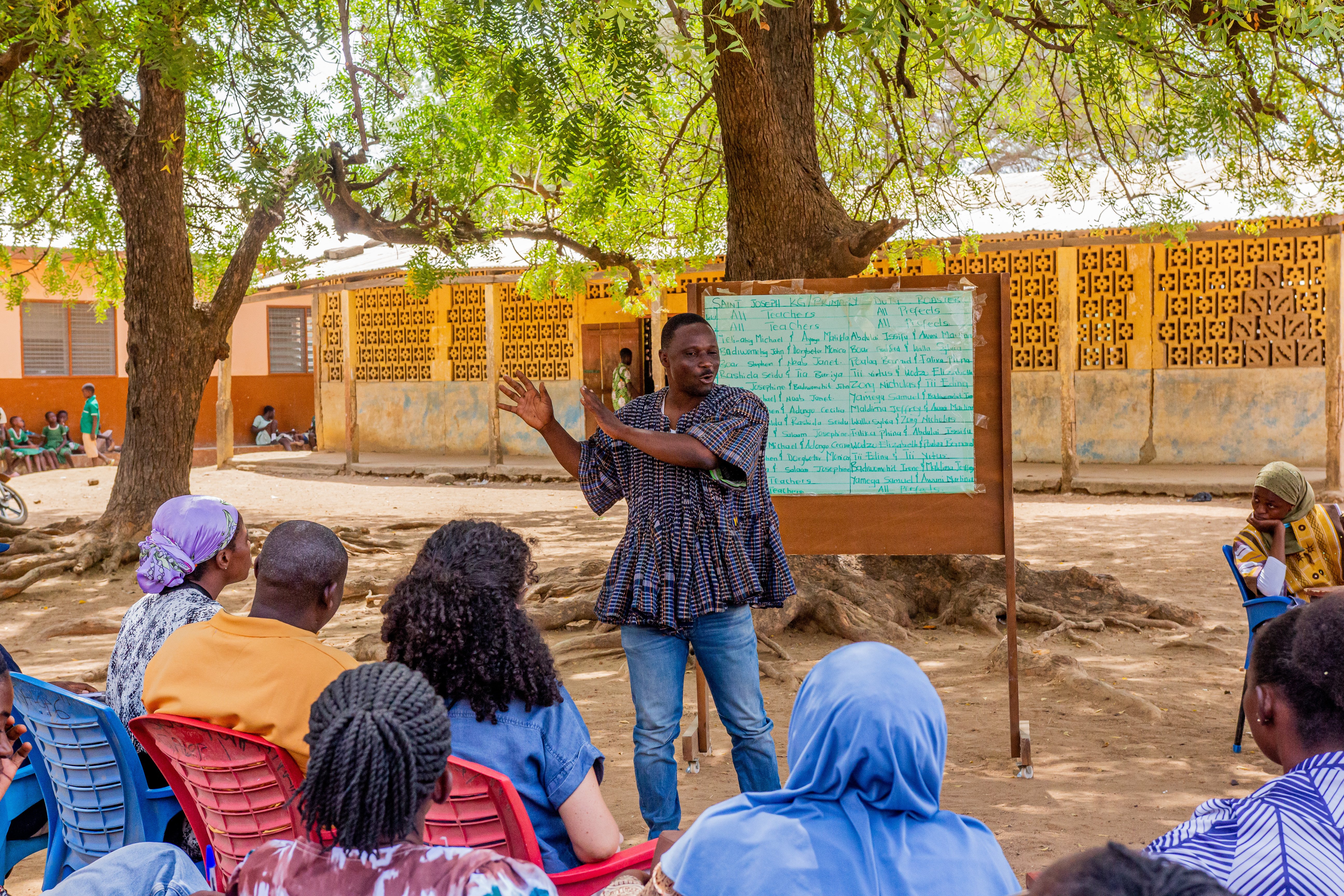
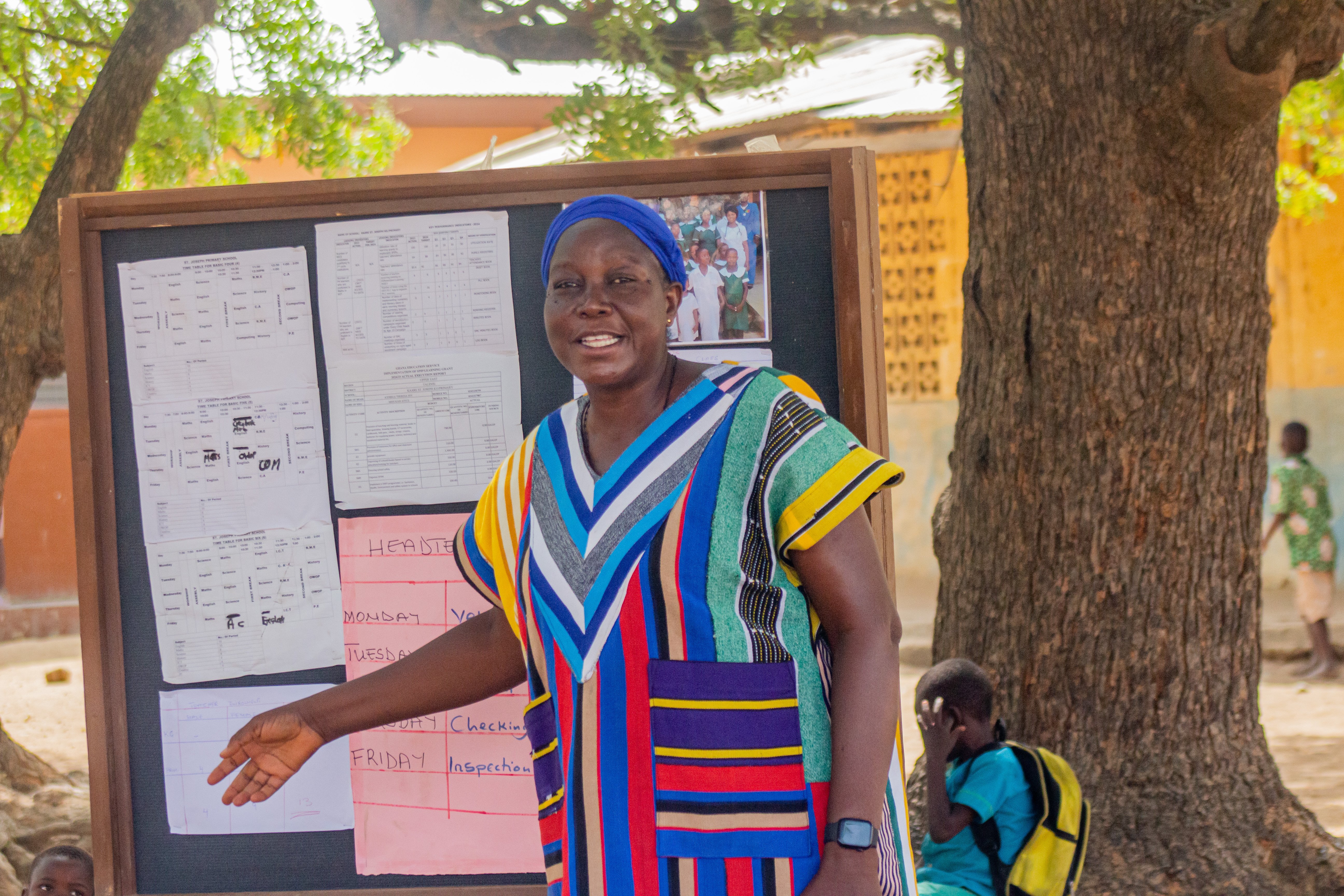
On the second day, the visit really came into its own as we ventured into the field. At Saint Joseph School in Karee, Talensi district, we discovered a system as simple as it was powerful: a large notice board at the school entrance, visible to all, showing the amounts of grants received, expenditure incurred, and unmet needs. Open data in action. Without formal literacy, yet fully equipped to challenge district officials, parents of pupils explained to us — with the help of a field officer — how they now use this information to hold authorities to account at community meetings.
“Before, we didn’t know if the money was reaching the school.
Now, we can see everything. And when something’s wrong, we ask questions.”
(Member of the parents’ committee).
In Tongo, at the headquarters of the Talensi District Assembly, we met the director of the Ghana Education Service and local officials. They were unanimous: the CLEAR project has changed the dynamic. Communities are more engaged. Education budgets are better monitored. And local elected representatives, under steady pressure from citizens, are now prioritising education.
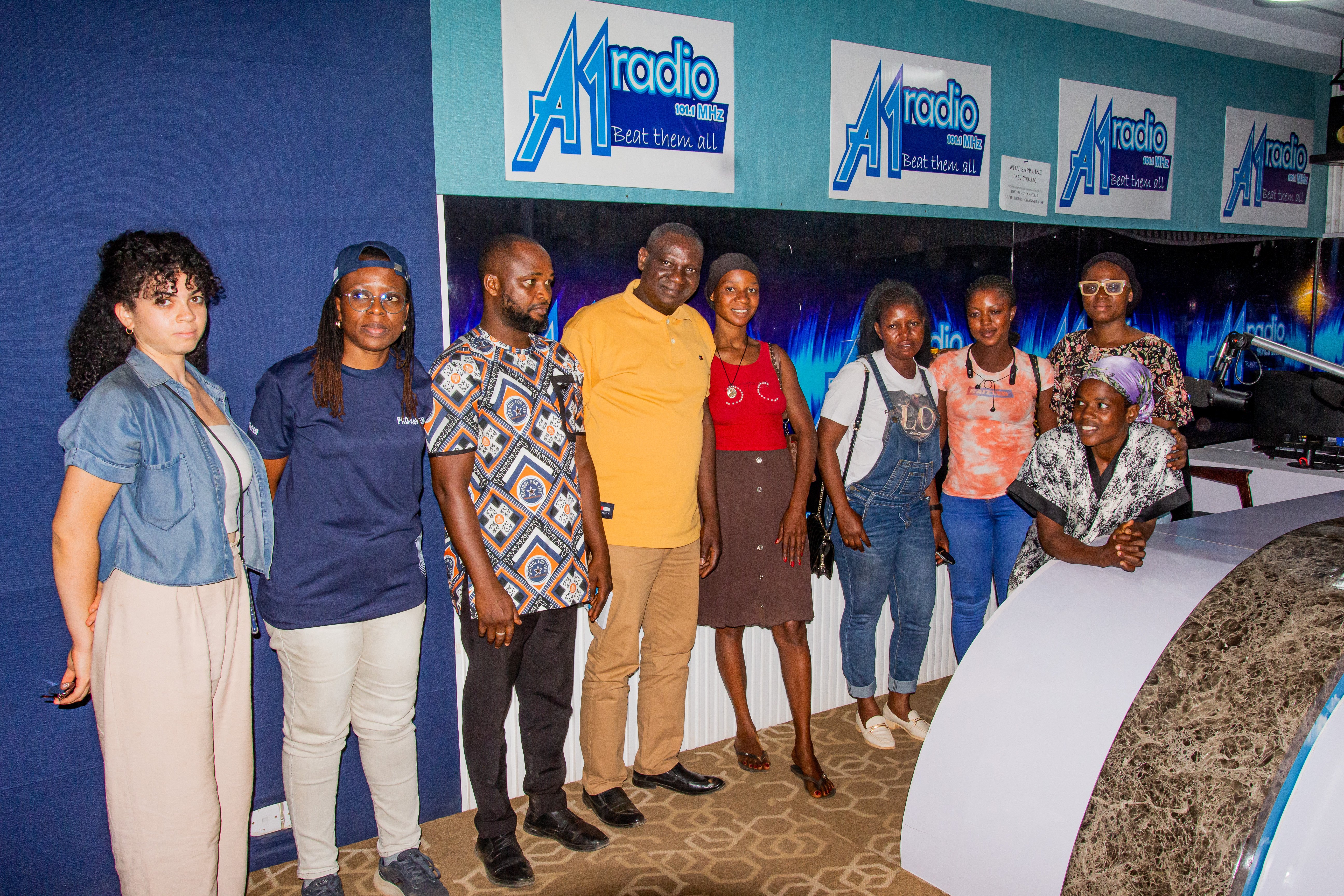
Later that evening, in Bolgatanga, we attended the radio programme hosted by members of the Girls’ Caucus. These young women, aged between fifteen and thirty, raise awareness every week among thousands of listeners about girls’ right to education. What moved us was their ease, their conviction, and their deep connection to the reality of their community. They do not simply recite messages prepared by distant consultants. They speak of what they experience, what they see around them, and what they want to change.
On the third day, in Nalerigu, in East Mamprusi municipality, we met the Community Journalists, the Gender Equality and Social Inclusion Champions and members of the Citizen Network. One Community Journalist summed up her role in a single sentence:
“I am the eyes of my community in the school, and the voice of the school on social media.”
These volunteers, trained and supported by local authorities, form an impressive citizen network built on trust and clear purpose.
The lessons we have learned
1. Our challenges are the same, even if our contexts differ
This experience confirms that collaborative learning between organisations in the Global South is not merely a formality — it is a strategic necessity. We do not start from scratch with every new project. We can draw on the experiences of our neighbours to accelerate progress, refine our approach, and avoid mistakes already made elsewhere.
2. Communities are not beneficiaries. They are active participants.
This is perhaps the most important lesson of this visit. The CLEAR project does not work for communities. It works with them, and above all, it supports them to work for themselves. In Benin, we could build on this model by involving communities more closely — not only as audiences for awareness-raising, but as co-designers of accountability tools.
To our partners, our donors, and all civil society organisations committed to education in West Africa: let us invest together in building bridges and learning from one another.
Because the stronger our connections, the greater our collective impact.
3. No transparency, no accountability
The open data notice board at the school in Karee reminded us of a simple truth that is sometimes lost in the complexity of our projects: citizens cannot hold duty-bearers to account for what they cannot see. Making school data accessible — on operations, funding and results — is a prerequisite for meaningful citizen participation. In Benin, adapting this model by presenting data visually and translating it into local languages such as Fon, Bariba or Dendi could significantly change how rural communities engage with their schools.
4. Radio and social media: allies we have yet to use to their full potential
The Girls’ Caucus radio programmes and the Community Journalists’ posts reach thousands of people at minimal cost. They create a public dynamic that makes the status quo politically costly for decision-makers. In Benin, we have a dense network of community radio stations and a connected young population. We have yet to fully harness these resources to amplify our advocacy.
And now, it’s your turn… Five days in Ghana. We travelled hundreds of kilometres between Tamale, Talensi, Bolgatanga and Nalerigu, and had dozens of conversations with community members, women leaders, young people, elected representatives and teachers. And a growing certainty: solutions do exist. They are often right there, within reach, driven by ordinary people doing extraordinary things. To our partners, our donors, and all civil society organisations committed to education in West Africa: let us invest together in building bridges and learning from one another. Because the stronger our connections, the greater our collective impact.
About Pro-RePEM and CLEAR:
- DEDRAS leads the PRO-RePEM project, which aims to strengthen the role of civil society in promoting transparency and accountability of education system policies and their implementation. Social Watch is the alliance partner. DEDRAS has been supported by Education Out Loud since 2022.
- The main Social Accountability Mechanism is the Education Observatories at local, provincial, and national levels. The project collaborates strategically with the Benin National Education Coalition (CBO-EPT), which facilitates the national level Education Observatory, while DEDRAS and Social Watch facilitate the local and provincial levels. This ensures synergy both between the three levels of monitoring and between the Education Out Loud-supported organisations in the country.
- Education Observatories serve as civil society monitoring and observatory groups. Depending on their level, they consist of community structures and CBOs/CSOs, including women’s associations, organisations of persons with disabilities, youth organisations, trade unions, and various other CSOs focused on education.
- Thanks to the Pro-RePEM initiative, the National Observatory, coordinated by the NEC, has expanded its reach to include citizen structures at the local level.
- As part of their social accountability work, School for Life and the CLEAR Alliance partners have established platforms that empower citizen groups to articulate their educational concerns and issues to duty-bearers at both local and national levels. The District Education Accountability Forums serve as venues for citizens and civil society to engage with municipal and district authorities regarding education matters. Local authorities have recognised these platforms as legitimate spaces for dialogue. The alliance further engages district leadership to integrate these platforms into the regular operations of the District Assemblies, thereby facilitating consistent and continued interaction between communities and authorities, even beyond the project.
- School for Life leads the CLEAR Alliance — Citizen Led Action for Educational Accountability and Responsiveness in Ghana. Youth Empowerment for Life (YEFL) and Ghana Developing Communities Association (GDCA) are alliance partners in this initiative. School for Life and the alliance have been supported by Education Out Loud since 2022, implementing the CLEAR project across six districts in northern Ghana.